You have been trying for a long time. You have made appointments, done the tests, and decided to go ahead with IVF. You want to do everything right.
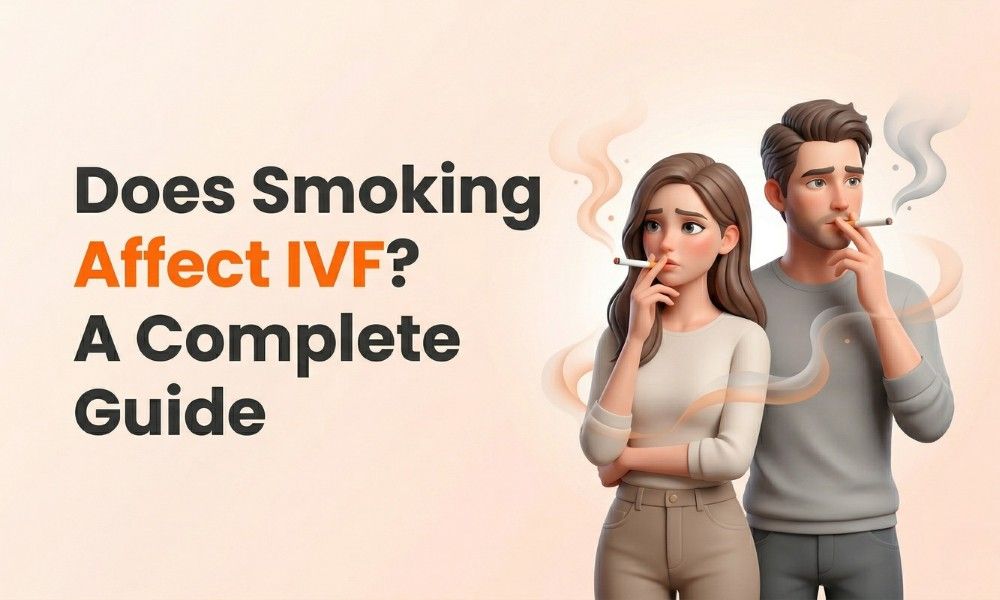
But if you or your partner smoke, there is one question that deserves an honest, clear answer before your first cycle begins: does smoking affect IVF?
The short answer is yes, and more than most people realize.
This guide explains exactly how smoking before IVF affects your body, what the research says about IVF success rates and smoking, and what you can do right now to give yourself the best possible chance.
What Does Smoking Actually Do to Your Fertility Health?
Cigarettes contain over 7,000 chemicals. Many of these are toxic to the reproductive system, in both men and women.
These chemicals create something called oxidative stress in the body. Think of it as internal rust. It damages cells, including the cells that produce eggs and sperm. It disrupts hormone balance. It interferes with the very processes that make pregnancy possible.
The damage is not just cosmetic or temporary. Some of it builds up over years of smoking and affects your fertility long before you ever sit in a fertility clinic.
How Smoking Affects Female Fertility
For women, the damage from smoking goes far deeper than most people expect. It does not just affect your lungs. It directly targets the very organs and hormones involved in getting pregnant.
Here is what is happening inside your body every time you smoke.
It Shrinks Your Egg Supply
Every woman is born with a fixed number of eggs. That number naturally declines with age. But smoking speeds up that decline in a way that cannot be undone.
Studies show that smoking accelerates the depletion of ovarian reserve, often leading to an earlier-than-expected decline in Anti-Müllerian Hormone (AMH) levels, which are used to assess egg count.
In plain terms, a 30-year-old woman who smokes may have the ovarian reserve of a woman in her late 30s. That matters enormously during IVF, where the number of eggs retrieved is directly tied to your chances of success.
It Damages the Quality of Your Eggs
Having eggs is one thing. Having healthy eggs is another.
Because smoking damages the genetic material in eggs, miscarriage rates and offspring birth-defect rates are higher among patients who smoke. Women who smoke are also more likely to conceive a pregnancy with abnormal chromosomes, such as Down syndrome, compared to non-smoking mothers.
Chromosomally abnormal eggs either fail to fertilize, fail to develop into viable embryos, or result in early miscarriage. This is one of the main reasons smokers often go through more IVF cycles without a successful outcome.
It Disrupts Your Hormones
Smoking interferes with estrogen production and throws off the hormonal signals that control your menstrual cycle and ovulation. This is why female smokers often respond poorly to the ovarian stimulation medications used in IVF, even when higher doses are given.
It Makes the Uterus a Harder Place for an Embryo to Settle
Even if fertilization happens and a healthy embryo is formed, implantation is the next hurdle. Smoking reduces blood flow to the uterus and creates an inflammatory environment that makes it harder for an embryo to attach and grow.
For women who smoke during treatment, there is around a 50% lower chance of implantation occurring following IVF than for those who did not smoke.
It Raises the Risk of Ectopic Pregnancy
Ectopic pregnancies and preterm labour occur more often among female smokers. An ectopic pregnancy, where the embryo implants in the fallopian tube rather than the uterus, is a serious medical emergency and ends the pregnancy entirely.
Even Secondhand Smoke Is a Problem
You do not have to be the one lighting the cigarette for the damage to occur. If your partner, a family member, or a colleague smokes around you regularly, the same toxic chemicals enter your bloodstream.
The same toxic chemicals that affect smokers can also harm non-smokers who are regularly exposed to cigarette smoke. If your partner smokes, their secondhand smoke exposure could be affecting your fertility journey. Creating a completely smoke-free environment in your home and car is essential for optimizing your chances of conception.
The picture is serious, but it is not hopeless. Understanding the damage is the first step toward doing something about it.
How Smoking Affects Male Fertility and Sperm Health
Fertility is a two-person process. If you are thinking about IVF and the male partner smokes, this section matters just as much.
It has been established that male cigarette smoking has a negative effect on semen quality and can induce DNA damage, leading to poorer reproductive outcomes.
Here is what happens to sperm health in male smokers:
- Lower sperm count: Fewer sperm per milliliter of semen
- Reduced motility: Sperm move more slowly or struggle to reach the egg
- Poor morphology: A higher proportion of abnormal-shaped sperm
- DNA fragmentation: Damage to the genetic material inside sperm, which can affect embryo development even after fertilization
Research found that male smoking caused an increased risk of pregnancy loss, while female smoking caused an adverse effect on ovarian reserve.
Both partners smoking creates a compounded problem that can be very difficult for even the best IVF treatment to fully overcome.
Does Smoking Affect IVF Success Rates? What the Latest Research Shows
When patients ask whether smoking before IVF really makes a difference, the honest answer is: the evidence is substantial and it points consistently in one direction.
Here is what the most current research tells us.
Pregnancy Rates and Live Birth Rates Are Measurably Lower
Female smokers may require more ovary-stimulating medications during IVF and can still have fewer eggs at retrieval time, with pregnancy rates approximately 30% lower compared to women undergoing IVF who do not smoke.
Research suggests that women who smoke are 1.6 times more likely to experience infertility than those who do not, and smokers have around half the chance of a successful IVF outcome compared to non-smokers.
Those are not small margins. They represent a meaningful difference in whether a couple goes home with a baby.
A 2025 Study Confirms the Impact on Live Birth
One of the most recent studies on this topic, published in Behavioral Medicine in February 2025, examined 329 women aged 20 to 35 who underwent frozen embryo transfer during IVF treatment.
The study found that the fertilization rate, pregnancy outcome, and live birth rate were all significantly higher in non-smoking women compared to those who smoked. The researchers concluded that smoking behaviour is one of the modifiable factors that can be changed to increase the chance of IVF success.
The word “modifiable” matters. Unlike age or genetics, smoking is something you can actually change.
Smoking Can Age Your Fertility by a Decade
One of the most striking pieces of data comes from a large-scale study that examined IVF outcomes across 8,457 women from all IVF clinics in the Netherlands.
Smoking was associated with a significantly lower delivery rate (OR = 0.72, 95% CI 0.61 to 0.84) and a significantly higher miscarriage rate compared to non-smokers. The researchers concluded that the devastating impact of smoking on live birth rates in IVF is comparable to an increase in female age of more than 10 years, from age 20 to 30.
Put simply, a 28-year-old woman who smokes may be entering IVF with the fertility profile of a woman approaching 40.
More Cycles, More Medications, More Cost
Smokers require nearly twice the number of IVF cycles to conceive as non-smokers. They also need higher doses of fertility drugs for ovarian stimulation, experience lower peak estradiol levels, fewer eggs retrieved, higher numbers of cancelled cycles, lower implantation rates, and more cycles with failed fertilization compared to non-smokers.
That is not just a biological problem. It is a financial and emotional one too. Every additional cycle is more money spent, more injections, more waiting, and more strain on your relationship and mental health.
The Risk Is Real for Couples, Not Just Individuals
Smoking by either partner, not just the woman, compounds the risk significantly.
Women who smoked at any point in their lifetime had an adjusted risk of 2.71 of not achieving a pregnancy and 2.51 of not having a live birth delivery during IVF. For couples who had smoked for more than five years, the adjusted risk of not achieving pregnancy rose to 4.27.
The number of oocytes retrieved decreased by 46% for men who smoked during the week of the IVF or GIFT visit.
The Miscarriage Risk Cannot Be Ignored
Getting a positive pregnancy test is only part of the goal. Carrying that pregnancy successfully is the other.
Research has found no significant difference in the overall pregnancy rate per embryo transfer between smokers and non-smokers. However, the miscarriage rate was significantly higher for smokers at 73%, compared to just 24% in non-smokers.
This finding is particularly important. It means smoking may allow fertilization and even early pregnancy to occur, but dramatically increases the risk of losing that pregnancy before it becomes a baby.
What About Male Smoking? A Nuanced 2025 Finding
A large retrospective study published in Gynecological Endocrinology in February 2025, conducted at the Brussels University Hospital and analysing 4,004 IVF and ICSI cycles, produced a nuanced finding worth understanding.
The study established that male cigarette smoking has a negative effect on semen quality and can induce DNA damage leading to poorer reproductive outcomes. However, after adjustment for confounders including female age, BMI, cause of infertility, and number of embryos transferred, male smoking did not independently impair live birth rates in this particular cohort.
It is important not to read this as reassurance for male smokers. The researchers themselves note that smoking cessation is most certainly advised for men in order to improve their reproductive outcomes due to the chemicals in cigarette smoke. DNA damage in sperm remains a real concern, and the effect on embryo development is not fully captured by live birth rate alone.
A Summary of the Key Data Points
| Outcome Measure | Impact of Smoking on IVF |
|---|---|
| Pregnancy rate per cycle | Approximately 30% lower in smokers |
| Live birth rate | Significantly reduced (OR 0.72 in large Dutch study) |
| Miscarriage rate | 73% in smokers vs 24% in non-smokers |
| Number of IVF cycles needed | Nearly double for smokers |
| Oocytes retrieved | Up to 46% fewer when male partner smokes during treatment week |
| Lifetime female smokers | 2.71x higher risk of not achieving pregnancy |
| Couples smoking over 5 years | 4.27x higher risk of not achieving pregnancy |
The research does not speak with a single voice on every detail. Some studies show stronger effects than others, depending on how much a person smokes, for how long, and when they stopped. But the overall direction of the evidence is consistent: smoking before IVF reduces your chances of success, increases your risk of miscarriage, and makes the entire treatment process harder and longer.
The encouraging flip side is that this is a risk factor you can actually do something about.
The Specific Risks of Smoking Before IVF
Whether you smoke occasionally or heavily, smoking before IVF creates a set of concrete clinical challenges that directly affect how your treatment performs.
| Risk Factor | Impact on IVF |
|---|---|
| Lower ovarian reserve | Fewer eggs available for retrieval |
| Damaged egg quality | Fewer viable embryos after fertilization |
| Reduced uterine receptivity | Lower implantation rates |
| Higher miscarriage risk | Miscarriage rate nearly 3x higher in smokers |
| Need for higher drug doses | More medication, more side effects, fewer results |
| Sperm DNA damage | Embryo development problems post-fertilization |
| Hormonal disruption | Poor response to ovarian stimulation medications |
Even secondhand smoke is a problem. If your partner smokes in your shared home, car, or living space, the same toxic chemicals enter your bloodstream. This can affect egg quality and uterine environment even if you have never smoked a single cigarette yourself.
There is no threshold below which smoking becomes safe for IVF. Occasional smokers face risks too, not just heavy smokers.
What Happens When You Quit Smoking Before IVF?
Here is the genuinely encouraging part of this conversation.
Your body has a remarkable ability to recover once you stop smoking. The damage is real, but much of it is not permanent. Quitting smoking before IVF is one of the most impactful things you can do, and the timeline of recovery is faster than most people expect.
For Men: Recovery Happens Within Months
Sperm has a full regeneration cycle of approximately 72 to 90 days. This means that the sperm your partner produces three months from now will be healthier than the sperm he produces today, if he stops smoking immediately.
Within 3 months of quitting, sperm count, motility, and morphology all begin to improve. Within 6 to 12 months, these parameters can recover substantially. DNA fragmentation levels in sperm also reduce over time, which directly improves embryo quality and reduces early pregnancy loss.
For Women: The Body Heals Gradually but Meaningfully
The recovery timeline for women is a little longer, but it is real.
Quitting smoking cannot restore eggs that have already been lost. Ovarian reserve, once depleted, does not replenish. However, stopping smoking can slow further decline, reduce the ongoing oxidative damage to remaining eggs, and significantly improve the uterine environment for implantation.
Blood flow to the uterus improves within weeks of quitting. Hormone levels begin to stabilise. The body becomes more responsive to the fertility medications used during IVF stimulation.
Women who quit at least 6 months before their IVF cycle tend to see meaningfully better outcomes. Those who quit 12 months before treatment show results that approach those of women who never smoked at all.
The Bottom Line
Every week you are smoke-free before your IVF cycle begins is a week your body is healing. Even if your timeline is tight, quitting today is always the right decision.
A Practical Plan for Quitting Smoking Before IVF
Quitting is hard. Nobody pretends otherwise. But with a clear plan and the right support, it is absolutely possible.
Step 1: Set a Quit Date
Choose a specific date within the next two weeks. Not “sometime soon.” A real date on the calendar. Write it down, tell your partner, and tell your fertility doctor. Accountability matters.
Step 2: Tell Your Fertility Team
Be open with your care team about your smoking history. They will not judge you. They can recommend safe cessation options, adjust your IVF protocol if needed, and help you plan a timeline that gives you the best possible chance.
Step 3: Clear Your Environment
Remove cigarettes, lighters, and ashtrays from your home and car before your quit date. Identify your personal triggers, whether that is stress, certain people, specific times of day, or particular situations, and make a plan for each one before it happens.
Step 4: Use Evidence-Based Cessation Tools
You do not have to quit on willpower alone. These approaches are proven to work:
- Nicotine replacement therapy (patches, gum, lozenges)
- Prescription medications (discuss with your doctor before IVF)
- Behavioural counselling or structured quit-smoking programmes
- Smartphone apps designed specifically for smoking cessation
- Support groups, either in person or online
Step 5: Both Partners Quit Together
If your partner smokes, ask them to quit alongside you. This removes secondhand smoke from your environment, creates mutual accountability, and benefits sperm health within just 3 months. Fertility is a shared journey. So is quitting.
Step 6: Replace the Habit With Something That Supports Fertility
Smoking often serves a function, most commonly stress relief. Replace it with something that actually helps your fertility journey. Yoga, walking, deep breathing exercises, meditation, or even a short daily walk can all reduce stress hormones that affect reproductive health.
Expert Tips From a Fertility Specialist
As a fertility specialist, here is what I want every patient walking into an IVF consultation to know:
There is no such thing as a “safe” level of smoking before IVF. Even light smoking, three to five cigarettes a day, affects egg quality, hormonal balance, and uterine receptivity. The harm is dose-related, meaning more smoking causes more damage, but the risk does not disappear at lower quantities.
Vaping and e-cigarettes are not a safe alternative. The research on vaping and fertility is still emerging, but nicotine in any form is harmful to reproductive health. Most fertility programmes require patients to stop all forms of tobacco and nicotine delivery before treatment begins. Do not switch to vaping and assume you are covered.
Stopping smoking during IVF still matters. If you have already started a cycle, stopping immediately can still improve uterine blood flow and reduce miscarriage risk. It is never too late.
Your mental health matters as much as your physical preparation. Quitting smoking while managing the emotional weight of IVF treatment is a lot to carry. Please speak to a counsellor or your care team if you are struggling. You do not need to manage this alone.
Nutrition accelerates your recovery after quitting. Once you stop smoking, a diet rich in antioxidants helps your body repair oxidative damage faster. Focus on berries, leafy greens, nuts, and colourful vegetables. Your fertility specialist may also recommend supplements such as CoQ10, folic acid, and vitamin D as part of your pre-IVF preparation.
Conclusion
You have already shown courage by choosing to pursue IVF. You are investing your time, your money, your hope, and your heart into this process.
Quitting smoking is not a punishment. It is a gift you give to your body and to the baby you are working so hard to bring into the world.
The research is clear, but more importantly, your body already knows how to heal. It just needs the chance.
At Ritu IVF, Jaipur, Dr. Ritu Agarwal and her team understand that fertility is not just a clinical journey. It is a deeply personal one. Every patient deserves honest, compassionate guidance that accounts for the full picture, including the lifestyle factors that can make the difference between a cycle that fails and one that succeeds.
Frequently Asked Questions
Q1. Does smoking affect IVF success rates directly?
Yes. Multiple studies consistently show that smoking before IVF reduces pregnancy rates by approximately 30% and significantly lowers live birth rates. Smokers also face a dramatically higher miscarriage rate and typically need nearly twice as many IVF cycles to achieve a successful pregnancy. It is one of the most significant modifiable risk factors in fertility treatment.
Q2. How long before IVF should I quit smoking?
Aim to quit at least 3 to 6 months before your IVF cycle, though 12 months is ideal for the best outcomes. For men, sperm quality begins improving within 3 months of stopping. For women, uterine environment improvements begin within weeks, while benefits to egg quality become more significant after 6 to 12 months of being completely smoke-free.
Q3. Can smoking before IVF cause a miscarriage?
Yes. Smoking is associated with significantly higher rates of early pregnancy loss in both natural conception and IVF cycles. Nicotine and other chemicals in cigarettes damage the genetic material inside eggs and sperm, which increases the likelihood of chromosomally abnormal embryos and miscarriage in the first trimester.
Q4. Does the male partner’s smoking affect IVF outcomes?
Yes, and meaningfully so. Male smoking damages sperm DNA, reduces sperm motility and count, and has been linked to increased risk of pregnancy loss after fertilization. The good news is that sperm health can improve substantially within 3 months of quitting, making this one of the fastest fertility improvements a male partner can make.
Q5. Is it too late to quit smoking if my IVF cycle has already begun?
It is never too late. If you have already started treatment, quitting immediately can still improve uterine receptivity, reduce inflammation, and lower your miscarriage risk. Speak to your doctor about cessation support options that are safe to use during active IVF treatment.