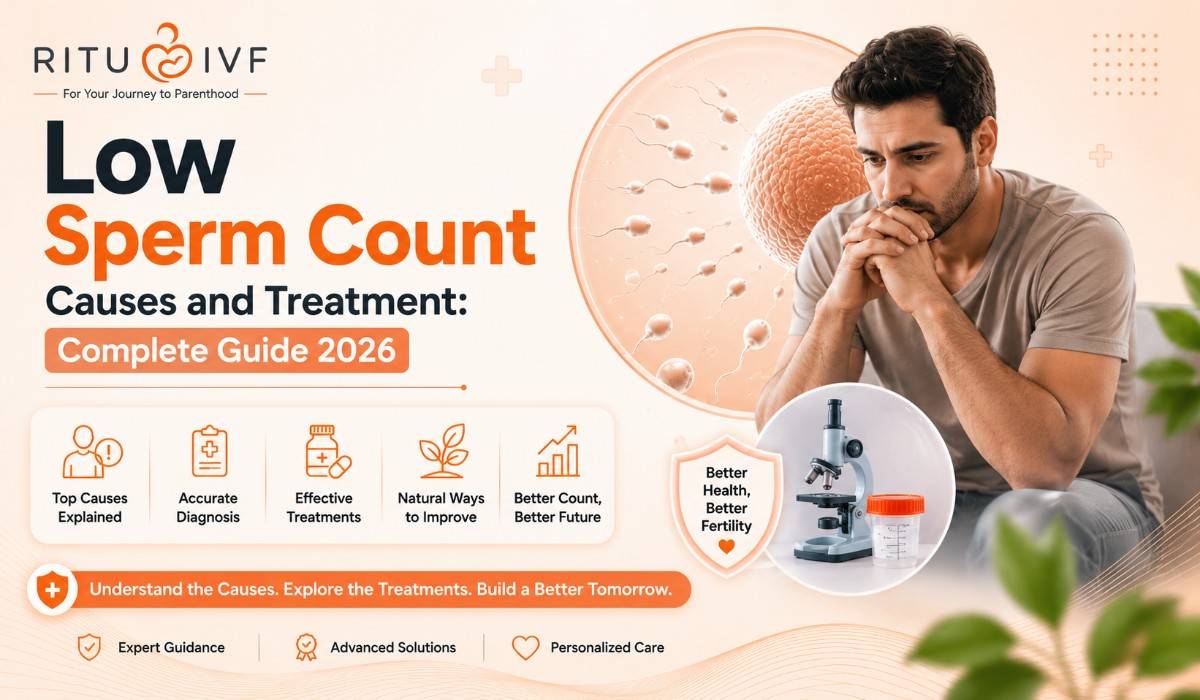
Low sperm count causes and treatment is one of the most important topics in male fertility, yet it remains one of the least talked about in Indian households.
When a couple struggles to conceive, the focus almost always shifts to the woman first. Tests, consultations, and treatments are arranged for her while the male partner’s fertility often goes unevaluated for months or even years. This delay costs couples precious time.
The medical reality is clear. Male factor infertility contributes to 40 to 50% of all infertility cases globally, according to multiple peer-reviewed studies. In India, a 2026 report confirmed that increasing numbers of men under 35 are presenting with suboptimal sperm parameters linked to lifestyle, stress, heat exposure, and environmental toxins.
Low sperm count causes and treatment must therefore be understood by both partners, not just the man. A low sperm count does not mean the end of the road toward parenthood. With accurate diagnosis and the right treatment, most men with oligospermia can father children, often through natural conception, IUI, or IVF with ICSI.
Dr. Ritu Agarwal, Senior Fertility Specialist and Founder of Ritu IVF Jaipur, evaluates male fertility as a core part of every couple’s treatment journey. According to Dr. Ritu Agarwal, a semen analysis should be one of the very first tests any couple undergoes when they begin investigating fertility concerns. Identifying and treating low sperm count early dramatically improves outcomes for the couple as a whole.
In this complete guide we cover what low sperm count means, every major cause, how it is diagnosed, all available treatment options, and what couples can expect at each stage of the journey.

Ready Your Sperm Count Is Low, Your Chances Are Not
[Book an Appointment Now]
What Is Low Sperm Count? Understanding Oligospermia
Low sperm count is medically known as oligospermia.
According to the World Health Organization (WHO) 2021 reference values, a normal sperm concentration is 16 million sperm per millilitre or more. A total sperm count of 39 million per ejaculate or more is considered within the normal range.
Oligospermia is classified into three levels of severity:
| Classification | Sperm Count |
|---|---|
| Mild Oligospermia | 10 to 15 million per ml |
| Moderate Oligospermia | 5 to 10 million per ml |
| Severe Oligospermia | Less than 5 million per ml |
| Azoospermia | No sperm detected in semen |
It is important to understand that sperm count is just one parameter in a semen analysis. Sperm motility (how well sperm swim) and sperm morphology (the shape of sperm) are equally important. A man can have a borderline sperm count but excellent motility and morphology and still achieve natural conception.
Conversely, a man with a seemingly adequate sperm count but poor motility may still face significant fertility challenges. This is why a complete semen analysis interpreted by an experienced fertility specialist is always more informative than a single number.
Low Sperm Count Causes and Treatment: Why Does It Happen?
Understanding low sperm count causes and treatment starts with identifying which category of cause is present. There are three broad categories.
Quick Overview: Low Sperm Count Causes
| Category | Examples |
|---|---|
| Medical Causes | Varicocele, infections, hormonal disorders, genetic conditions |
| Lifestyle Causes | Smoking, alcohol, obesity, heat exposure, stress |
| Environmental Causes | Pesticides, heavy metals, radiation, endocrine disruptors |
Medical Causes of Low Sperm Count
1. Varicocele
Varicocele is the enlargement of veins within the scrotum, similar to varicose veins in the legs. It is the single most common correctable cause of male infertility, present in approximately 35 to 40% of men with low sperm count.
Varicocele raises the temperature inside the scrotum, which directly damages sperm production. The testes require a temperature approximately 2 degrees Celsius below body temperature to produce healthy sperm.
- Often present with no obvious symptoms
- Diagnosed through physical examination and scrotal ultrasound
- Surgical repair (varicocelectomy) improves sperm parameters in most cases
- Post-surgery sperm improvement takes approximately 3 to 6 months
2. Hormonal Imbalances
The hypothalamus and pituitary gland in the brain control the hormonal signals that instruct the testes to produce sperm. When these signals are disrupted, sperm production drops significantly.
Key hormonal causes include:
- Low testosterone (hypogonadism)
- Elevated prolactin levels
- Thyroid disorders affecting reproductive hormones
- Congenital adrenal hyperplasia
Hormonal imbalances are diagnosed through a blood panel and are highly treatable with targeted medication.
3. Infections
Certain infections directly affect sperm production and sperm transport pathways.
- Epididymitis: Inflammation of the epididymis, often caused by bacterial infections or STIs
- Orchitis: Viral or bacterial inflammation of the testes, including mumps orchitis
- Sexually transmitted infections (STIs): Chlamydia and gonorrhoea can cause scarring of sperm transport ducts
- Prostatitis: Chronic prostate inflammation affects semen quality and sperm function
Early antibiotic treatment prevents permanent damage to sperm production.
4. Genetic Conditions
Some men have genetic conditions that affect sperm production at a fundamental level.
- Klinefelter Syndrome (XXY): An extra X chromosome that disrupts testicular development and sperm production
- Y-chromosome microdeletions: Missing segments of the Y chromosome that contain genes essential for spermatogenesis
- Cystic fibrosis gene mutations: Often associated with absence of the vas deferens (the tube carrying sperm)
Genetic testing is recommended for men with severe oligospermia or azoospermia before proceeding to IVF with ICSI.
5. Blocked Sperm Ducts
Physical blockages anywhere along the sperm transport pathway prevent sperm from reaching semen even when production in the testes is normal.
- Previous vasectomy (intentional blockage)
- Scarring from infections or previous surgeries
- Congenital absence of the vas deferens
Surgical sperm retrieval techniques (TESA, PESA, microTESE) can extract sperm directly from the testes for use in IVF with ICSI even when blockages are present.
6. Ejaculation Problems
Retrograde ejaculation occurs when semen travels backward into the bladder instead of forward through the urethra during ejaculation. It produces little or no semen during climax.
Causes include diabetes, spinal cord injuries, bladder surgery, and certain medications. Sperm can be retrieved from urine samples for use in IUI or IVF.
Lifestyle Causes of Low Sperm Count
Lifestyle factors are among the most significant and most reversible contributors to low sperm count in men under 40.
1. Smoking
Cigarette smoking reduces sperm count, sperm motility, and sperm morphology simultaneously. Men who smoke have measurably lower semen quality across all parameters compared to non-smokers.
The good news is that sperm quality begins to improve within 3 months of quitting smoking, as sperm regeneration takes approximately 74 days.
2. Alcohol Consumption
Regular alcohol consumption, particularly heavy drinking, disrupts testosterone production and directly damages sperm DNA. Even moderate alcohol intake has been associated with reduced sperm concentration and motility in recent studies.
3. Obesity
Excess body fat converts testosterone to estrogen through a process called aromatization. This hormonal disruption reduces sperm production and quality. Men with a BMI over 30 consistently show lower sperm counts and higher rates of sperm DNA fragmentation.
4. Heat Exposure
The testes are located outside the body for a specific biological reason: sperm production requires a cooler temperature than core body temperature.
Frequent exposure to high heat significantly impairs sperm production:
- Hot tubs, saunas, and steam rooms
- Prolonged laptop use on the lap
- Tight underwear or clothing
- Jobs involving prolonged sitting (drivers, desk workers)
Reducing heat exposure consistently improves sperm count within one to three months.
5. Chronic Stress
Chronic psychological stress elevates cortisol, which suppresses testosterone production and disrupts the hormonal cascade required for spermatogenesis. Stress management is a medically relevant, not just emotional, component of male fertility treatment.
6. Anabolic Steroids and Supplements
Anabolic steroids, including those used in bodybuilding, severely suppress natural testosterone production and can cause complete cessation of sperm production (azoospermia) within months of use. Recovery after stopping steroid use can take 12 to 24 months and is not guaranteed in all cases.
Environmental Causes of Low Sperm Count
Environmental toxins are an increasingly recognized cause of declining sperm quality in urban Indian men.
- Pesticides: Organophosphate and organochlorine pesticides are endocrine disruptors that interfere with testosterone production
- Heavy metals: Lead, mercury, and cadmium exposure through industrial work, contaminated water, or certain foods
- Plastics (BPA and phthalates): Found in plastic food containers, water bottles, and packaging. These chemicals mimic estrogen and disrupt male hormone production
- Radiation: Prolonged exposure to X-rays or radiation therapy
Minimizing exposure to these toxins as part of a comprehensive low sperm count treatment plan is increasingly recommended by fertility specialists.
How Is Low Sperm Count Diagnosed?
Accurate diagnosis is the foundation of effective low sperm count causes and treatment planning.
Step 1: Semen Analysis
The first and most important test. Evaluates sperm count, motility, morphology, semen volume, and liquefaction time using WHO 2021 reference values.
Two separate semen analyses are typically required to confirm oligospermia, as sperm parameters naturally fluctuate day to day.
Step 2: Hormone Blood Panel
Tests testosterone, FSH, LH, prolactin, and thyroid hormones to identify hormonal causes.
Step 3: Scrotal Ultrasound
Detects varicocele, testicular abnormalities, and blockages in the epididymis or vas deferens.
Step 4: Genetic Testing
Recommended for severe oligospermia or azoospermia to identify Y-chromosome microdeletions or Klinefelter Syndrome.
Step 5: Sperm DNA Fragmentation Test
Measures the integrity of sperm DNA. High DNA fragmentation is associated with recurrent miscarriage and failed IVF cycles even when sperm count appears normal.
Need an Appointment?
CLICK HEREOligospermia Treatment in India: All Available Options
Treatment for low sperm count depends entirely on the identified cause. There is no universal treatment that works for every man.
Treatment Comparison Table
| Treatment | Best For | Expected Outcome |
|---|---|---|
| Varicocelectomy Surgery | Varicocele-related low count | 60 to 70% show sperm improvement |
| Hormonal Therapy | Hormonal imbalances | Restores sperm production in most cases |
| Antibiotics | Infection-related causes | Improves parameters after infection resolution |
| Lifestyle Changes | Lifestyle-related causes | Measurable improvement within 3 months |
| IUI | Mild to moderate oligospermia | 10 to 20% success per cycle |
| IVF with ICSI | Severe oligospermia | Up to 80 to 85% fertilization rate |
| Surgical Sperm Retrieval (TESA/PESA) | Azoospermia or blocked ducts | Sperm retrieved for ICSI in most cases |
How to Increase Sperm Count Naturally
For men with lifestyle-related low sperm count, natural interventions produce meaningful improvements within 3 to 6 months.
Diet Changes:
- Increase zinc-rich foods: pumpkin seeds, chickpeas, lentils, meat
- Add selenium sources: Brazil nuts, sunflower seeds, eggs
- Include antioxidant-rich foods: berries, tomatoes, leafy greens
- Eat omega-3 rich foods: fatty fish, walnuts, flaxseeds
- Reduce processed foods, sugar, and trans fats completely
Lifestyle Changes:
- Quit smoking and reduce alcohol to zero or near zero
- Achieve a healthy BMI through diet and regular exercise
- Switch to loose fitting cotton underwear
- Avoid hot baths, saunas, and laptop on lap
- Manage stress through yoga, exercise, or mindfulness practices
Evidence-Based Supplements:
- Zinc: Directly supports testosterone production and sperm development
- CoQ10: Improves sperm motility and reduces oxidative damage to sperm DNA
- L-Carnitine: Associated with improved sperm motility in multiple meta-analyses
- Vitamin D: Low Vitamin D is associated with poor sperm motility and count
- Selenium: Protects sperm from oxidative DNA damage
Always consult Dr. Ritu Agarwal before starting any supplement regimen to ensure appropriate dosing for your specific test results.
IVF for Low Sperm Count: When Is It Needed?
IVF for low sperm count is recommended when simpler treatments have not succeeded or when sperm counts are too low for IUI to be effective.
The key technique used in IVF for male infertility is ICSI (Intracytoplasmic Sperm Injection), where a single healthy sperm is injected directly into a mature egg in the laboratory. This means that even men with very low sperm counts, as few as a handful of viable sperm, can father biological children through IVF with ICSI.
IVF with ICSI is recommended when:
- Sperm count is below 5 million per ml (severe oligospermia)
- Sperm motility is severely impaired
- Multiple IUI cycles have failed
- Sperm DNA fragmentation is high
- Azoospermia requires surgical sperm retrieval
ICSI achieves fertilization rates of 80 to 85% per egg injected in experienced hands. At Ritu IVF Jaipur, Dr. Ritu Agarwal and her specialized embryology team use the most advanced ICSI techniques to give couples the best possible chance of fertilization even in cases of severe male factor infertility.
Male Infertility Treatment Jaipur: When to See a Specialist
Do not wait. Early evaluation leads to faster treatment and better outcomes.
See a male infertility specialist in Jaipur if:
- You and your partner have been trying to conceive for 12 months without success
- Your partner is over 35 and you have been trying for 6 months
- You have had a previous semen analysis showing low count, poor motility, or abnormal morphology
- You have a history of groin injury, surgery, mumps, or STI
- You use or have used anabolic steroids
- You work in an environment with heavy chemical, pesticide, or radiation exposure
- Two or more IUI cycles have failed
Need an Appointment?
CLICK HEREFrequently Asked Questions (FAQs)
Q1: What is the main cause of low sperm count in men?
The most common medical cause of low sperm count is varicocele, present in 35 to 40% of men with oligospermia. Other leading causes include hormonal imbalances, infections, and genetic conditions. Lifestyle factors including smoking, obesity, chronic stress, and heat exposure are the most common reversible causes and are highly responsive to targeted changes within 3 to 6 months.
Q2: Can low sperm count be cured naturally without medication?
Mild to moderate oligospermia caused by lifestyle factors can be significantly improved naturally within 3 to 6 months through quitting smoking, reducing alcohol, achieving a healthy BMI, avoiding heat exposure, and adding zinc, CoQ10, and antioxidant-rich foods to the diet. However, medical causes like varicocele, hormonal disorders, and genetic conditions require medical or surgical intervention alongside lifestyle changes.
Q3: Can men with very low sperm count have biological children through IVF?
Yes. IVF with ICSI has made biological fatherhood possible for men with severely low sperm counts, including some cases of azoospermia where sperm are retrieved surgically from the testes through TESA or microTESE procedures. A single healthy sperm is all that is needed for ICSI fertilization. Fertilization rates of 80 to 85% per injected egg are achievable at experienced IVF centres like Ritu IVF Jaipur.
Q4: How long does it take to increase sperm count after making lifestyle changes?
Sperm regeneration takes approximately 74 days, which means measurable improvement in semen analysis results typically appears within 3 months of consistent lifestyle changes. Full improvement, particularly after quitting smoking or achieving significant weight loss, is usually seen at the 3 to 6 month mark. This is why fertility specialists recommend starting lifestyle changes at least 3 months before a planned IUI or IVF cycle.
Q5: Is oligospermia treatment in India effective for severe cases?
Yes. Oligospermia treatment in India has advanced significantly with the widespread availability of ICSI, surgical sperm retrieval techniques (TESA, PESA, microTESE), and sperm DNA fragmentation testing. At experienced fertility centres, even severe oligospermia and azoospermia cases are successfully treated. The key is accurate diagnosis of the underlying cause followed by a targeted medical, surgical, or assisted reproduction treatment plan.
Medical Disclaimer: This blog post is for general informational and educational purposes only. It does not constitute medical advice, diagnosis, or treatment. Always consult a qualified fertility specialist before making any healthcare decisions.