PCOS treatment in Jaipur has become one of the most searched fertility and gynecology topics in Rajasthan, and the numbers explain exactly why.
As many as 25 to 30% of women of reproductive age in India have PCOS, making it one of the most prevalent hormonal conditions affecting women today. In Jaipur alone, thousands of women are diagnosed with this condition every year, yet a large number continue to live with undiagnosed symptoms for months or even years before seeking proper medical care.
Studies suggest that over 70% of women with PCOS are not even diagnosed. They get to know about their condition only after a certain period, often when they begin trying to conceive and face unexpected difficulties.
This delay is dangerous. Left unmanaged, PCOS does not just affect menstrual cycles and fertility. It significantly increases the long-term risk of type 2 diabetes, cardiovascular disease, endometrial cancer, and mental health conditions including anxiety and depression.
Dr. Ritu Agarwal, Senior Fertility Specialist and Founder of Ritu IVF Jaipur, sees PCOS patients every single day. According to Dr. Ritu Agarwal, the most important thing any woman with PCOS can do is seek an accurate diagnosis and a personalized treatment plan early, because PCOS is one of the most manageable conditions in women’s health when approached correctly.
This complete 2026 guide covers everything you need to know about PCOS treatment in Jaipur, from understanding the condition and recognizing symptoms to the latest medical treatments, lifestyle strategies, dietary approaches, and fertility options including IVF for PCOS.

Ready to take the next step toward parenthood
What Is PCOS? Understanding the Condition That Affects 1 in 4 Indian Women
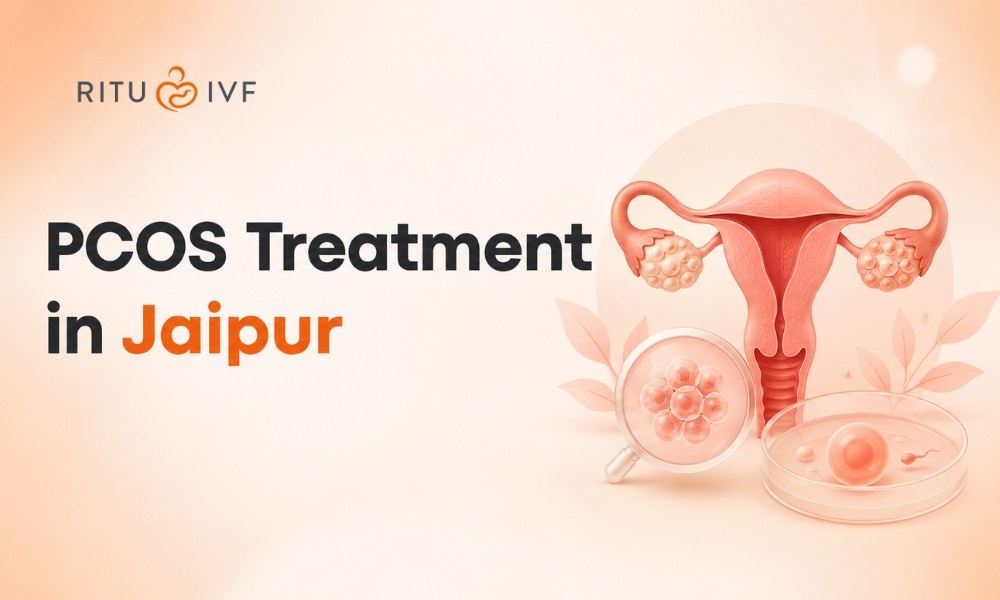
PCOS (Polycystic Ovary Syndrome) is a hormonal disorder that affects the ovaries, the menstrual cycle, and the overall hormonal balance of the female body.
In PCOS, the ovaries produce excess male hormones called androgens. This hormonal imbalance prevents eggs from maturing and being released normally during the menstrual cycle. Instead of a mature egg being released each month, multiple small, undeveloped follicles accumulate in the ovaries, which is what gives the condition its name.
PCOS is characterised by irregular menstrual cycles, increased androgen levels, and multiple follicles in the ovaries. The hormonal imbalance hinders ovulation, making it extremely difficult for affected women to conceive naturally without medical support.
It is important to understand that PCOS is not just a reproductive condition. It is a full-body metabolic and endocrine disorder that affects:
- Menstrual cycle regularity and ovulation
- Skin health (acne, oiliness)
- Hair growth patterns (excess facial and body hair)
- Hair loss (thinning on the scalp)
- Weight and metabolism
- Insulin sensitivity and blood sugar regulation
- Mood and mental health
- Long-term cardiovascular health
PCOD vs PCOS: Is There a Difference?
Many women in Jaipur and across India search for PCOD treatment in Jaipur and PCOS treatment in Jaipur interchangeably, and there is an important distinction to understand.
PCOD (Polycystic Ovarian Disease) is a milder form of the condition where the ovaries release immature eggs that accumulate as cysts. Hormonal imbalance is present but less severe.
PCOS (Polycystic Ovary Syndrome) is a more complex endocrine disorder involving significant hormonal imbalance, insulin resistance, and metabolic dysfunction. It is the more clinically serious of the two.
Both conditions require proper diagnosis and management. Both respond well to targeted treatment. And both are treated effectively at specialist fertility and gynecology centers in Jaipur.
PCOS Symptoms: How to Recognize It Early
Recognizing PCOS symptoms early is the key to starting treatment before the condition causes long-term complications.
Many women dismiss their symptoms as stress-related, normal hormonal variation, or simply part of their constitution. This is one of the primary reasons why so many cases remain undiagnosed for years.
Common PCOS Symptoms to Watch For
- Irregular periods: Cycles that are longer than 35 days, fewer than 8 cycles per year, or completely absent
- Heavy or prolonged bleeding: When periods do occur, they may be unusually heavy or last longer than normal
- Excess facial and body hair (Hirsutism): Unwanted hair growth on the face, chin, chest, abdomen, or inner thighs due to elevated androgens
- Acne: Persistent, hormonal acne on the face, chest, and upper back that does not respond well to standard skincare
- Scalp hair thinning: Male-pattern hair thinning or loss on the scalp
- Weight gain: Unexplained weight gain, particularly around the abdomen, linked to insulin resistance
- Skin darkening (Acanthosis Nigricans): Dark, velvety patches on the neck, armpits, or groin
- Mood changes: Anxiety, depression, and mood swings linked to hormonal fluctuation
- Difficulty conceiving: Irregular or absent ovulation makes natural conception challenging
If you are experiencing three or more of these symptoms regularly, a diagnostic evaluation for PCOS is strongly recommended. Do not wait.
How Is PCOS Diagnosed in Jaipur?
PCOS diagnosis in Jaipur follows the internationally recognized Rotterdam Criteria, which requires at least two of the following three features to be present:
- Irregular or absent ovulation (evidenced by irregular or absent menstrual cycles)
- Clinical or biochemical signs of elevated androgens (excess hair, acne, or elevated testosterone on blood test)
- Polycystic ovaries on ultrasound (12 or more follicles in each ovary or increased ovarian volume)
Standard Diagnostic Tests for PCOS in Jaipur
- Pelvic ultrasound: To visualize ovarian morphology and count antral follicles
- Hormone blood panel: FSH, LH, AMH, testosterone, DHEAS, prolactin, thyroid hormones
- Fasting insulin and blood glucose: To assess insulin resistance and diabetes risk
- Lipid profile: To evaluate cardiovascular risk associated with PCOS
- BMI and waist circumference: To assess metabolic risk profile
A complete diagnostic workup typically takes one to two clinic visits and gives your doctor the complete picture needed to design a targeted, personalized treatment plan.
PCOS Treatment in Jaipur: All Available Options in 2026
PCOS treatment in Jaipur in 2026 has evolved significantly, with a much stronger emphasis on personalized, multi-dimensional treatment approaches rather than a single medication or one-size-fits-all intervention.
The most effective PCOS treatment plans combine lifestyle modification, targeted medication, nutritional support, and fertility-focused interventions when conception is a goal.
Overview: PCOS Treatment Options in Jaipur 2026
| Treatment Category | Options Available | Best For |
|---|---|---|
| Lifestyle Modification | Diet, Exercise, Weight Management | All PCOS patients as first-line treatment |
| Oral Medications | Metformin, Inositol, OCP, Anti-androgens | Hormonal regulation, insulin resistance |
| Ovulation Induction | Letrozole, Clomiphene | Women trying to conceive naturally or with IUI |
| Advanced Fertility | IUI, IVF with ICSI | Women who do not respond to simpler treatments |
| Surgical | Laparoscopic Ovarian Drilling | Selected cases of clomiphene-resistant PCOS |
| Nutritional Supplements | Myo-Inositol, Vitamin D, CoQ10 | Hormonal balance and egg quality support |
Lifestyle Changes: The Most Powerful First Step in PCOS Treatment
Lifestyle modification is not just a supportive measure for PCOS. It is the single most evidence-backed first-line treatment for the majority of women with this condition.
For most women with PCOS in Jaipur, meaningful improvement in symptoms, hormonal balance, and menstrual regularity can be achieved through targeted lifestyle changes alone, particularly when started early and maintained consistently.
Exercise and Physical Activity
Regular moderate exercise is one of the most effective interventions for improving insulin sensitivity in PCOS.
- Aim for 150 minutes of moderate-intensity exercise per week
- Combine aerobic exercise (brisk walking, cycling, swimming) with strength training
- Even a 5 to 10% reduction in body weight in overweight women with PCOS significantly improves ovulation frequency, menstrual regularity, and hormonal profiles
- Yoga has additional benefits for PCOS through stress reduction and cortisol regulation
Sleep and Stress Management
Chronic stress elevates cortisol, which worsens insulin resistance and androgen production in PCOS.
- Aim for 7 to 9 hours of quality sleep per night
- Practice stress reduction techniques: yoga, meditation, mindfulness, or professional counseling
- Address anxiety and depression directly, as these are clinically significant comorbidities of PCOS that deserve proper attention alongside physical treatment
PCOS Diet Plan: What to Eat and What to Strictly Avoid
A targeted PCOS diet plan is one of the most powerful tools for managing symptoms naturally and improving fertility outcomes.
The foundation of a PCOS-friendly diet is reducing insulin resistance by controlling blood sugar levels through consistent, intentional food choices.
Best Foods for PCOS Management
- Low glycemic index (GI) carbohydrates: Brown rice, oats, quinoa, whole wheat, lentils, chickpeas
- Lean proteins: Eggs, fish, chicken, paneer, tofu, legumes
- Healthy fats: Avocado, olive oil, nuts, seeds, fatty fish
- Antioxidant-rich vegetables: Spinach, broccoli, bell peppers, tomatoes, beetroot
- Omega-3 rich foods: Salmon, sardines, walnuts, flaxseeds, chia seeds
- Fiber-rich foods: All vegetables, whole grains, legumes, fruits with skin
Foods to Strictly Avoid With PCOS
- Refined carbohydrates and sugar: White rice, white bread, maida, sweets, soft drinks
- Trans fats and processed foods: Packaged snacks, fried foods, fast food
- Excess dairy: Full-fat dairy in large quantities may worsen androgen levels in some women
- Alcohol: Disrupts hormonal balance and worsens insulin resistance
- Excessive caffeine: More than one to two cups of coffee per day may worsen hormonal disruption
It is important to cut intake of sweets and processed foods and significantly increase fiber intake. Alongside dietary changes, exercise and achieving a 5 to 10% reduction in body weight produces significant improvement in PCOS symptoms for most women.
Evidence-Based Supplements for PCOS
Myo-Inositol and D-chiro-Inositol (MI-DCI) are among the most researched supplements for PCOS management. Clinical studies show significant reduction in LH to FSH ratio, free testosterone, and DHEAS levels after regular MI-DCI use, alongside meaningful improvement in hirsutism scores.
Key evidence-supported supplements for PCOS management include:
- Myo-Inositol (2,000 mg) with D-chiro-Inositol (50 mg): Improves insulin sensitivity, restores ovulation, and reduces androgen levels
- Vitamin D3: Deficiency is extremely common in Indian women with PCOS and supplementation improves insulin sensitivity and menstrual regularity
- CoQ10: Supports mitochondrial function in egg cells, improving egg quality for women planning conception
- Omega-3 fatty acids: Reduces inflammation and improves hormonal balance
- Zinc: Supports insulin regulation and reduces excess androgen-related symptoms including acne and hirsutism
Always consult your PCOS specialist in Jaipur before starting any supplement regimen, as dosage requirements are highly individual.
Medical Treatments for PCOS: Medications and Their Role
When lifestyle changes alone are insufficient, medical treatment for PCOS in Jaipur adds targeted pharmacological support to the overall management plan.
1. Metformin
Metformin is an insulin-sensitizing medication and one of the most widely prescribed drugs for PCOS management in India.
- Reduces insulin resistance at the cellular level
- Lowers androgen production by the ovaries
- Improves menstrual cycle regularity
- Supports weight management in insulin-resistant PCOS patients
- Reduces long-term risk of type 2 diabetes
Research confirms that Metformin combined with Myo-Inositol shows improved outcomes in PCOS management in Indian women, with evidence supporting its use as a first-line insulin sensitizer.
2. Oral Contraceptive Pills (OCPs)
For women with PCOS who are not currently trying to conceive, oral contraceptive pills regulate the menstrual cycle, reduce androgen levels, and improve acne and hirsutism.
- Provide predictable, regular menstrual cycles
- Reduce excess androgen-driven symptoms
- Protect the uterine lining from hyperplasia risk associated with chronic anovulation
- Not suitable for women actively trying to conceive
3. Anti-Androgen Medications
Medications like Spironolactone reduce the effects of excess male hormones in PCOS, directly addressing hirsutism, acne, and scalp hair thinning when these symptoms are prominent.
4. Ovulation Induction Medications
For women with PCOS who are trying to conceive, ovulation induction is the critical next step.
- Letrozole: Currently the first-line ovulation induction medication for PCOS-related infertility, recommended by international guidelines over Clomiphene due to higher ovulation and pregnancy rates
- Clomiphene Citrate: An established second-line option when Letrozole is not suitable
- Both medications are used under ultrasound monitoring to track follicle development and precisely time intercourse or IUI
PCOS and Fertility: Can You Get Pregnant With PCOS?
This is the question most women with PCOS in Jaipur eventually ask, and the answer is reassuringly positive.
Yes. The vast majority of women with PCOS can achieve pregnancy with appropriate medical support.
According to recent studies conducted in India, almost 10 to 15% of women in the reproductive age group are suffering from symptoms of PCOS, making it the most common cause of anovulatory infertility. However, with tailored treatment plans, promising success rates for fertility improvement can now be obtained.
PCOS affects fertility primarily by disrupting ovulation. When ovulation is restored through lifestyle changes, medication, or assisted reproductive technology, the path to pregnancy becomes significantly clearer.
Fertility Treatment Steps for PCOS
- Lifestyle optimization: Weight management, diet correction, and exercise to restore spontaneous ovulation in mild cases
- Ovulation induction with timed intercourse: Letrozole or Clomiphene with follicle tracking, used for 3 to 6 cycles
- IUI (Intrauterine Insemination): When timed intercourse cycles fail or when mild male factor is also present
- IVF (In Vitro Fertilization): When simpler treatments have not succeeded or when other fertility factors are present
IVF for PCOS in Jaipur: When Is It Needed and What to Expect
IVF offers higher success rates for women with PCOS compared to other fertility treatments, especially when conventional methods have not worked. IVF helps women with PCOS conceive by overcoming challenges like irregular ovulation and hormonal imbalances, making pregnancy possible when other options have not succeeded.
IVF for PCOS in Jaipur is typically recommended when:
- Three to six cycles of ovulation induction with timed intercourse have failed
- Two or more IUI cycles have not resulted in pregnancy
- Additional fertility factors are present such as blocked tubes or male factor infertility
- The woman is over 35 and time is an important clinical consideration
- AMH levels are very high, indicating high OHSS risk requiring specialist protocol management
IVF for PCOS: Key Considerations
Women with PCOS face one specific additional risk during IVF: Ovarian Hyperstimulation Syndrome (OHSS). Because PCOS ovaries are already hypersensitive, they can over-respond to the stimulation medications used in IVF.
Modern IVF protocols for PCOS address this directly through:
- Low-dose stimulation protocols using the minimum effective gonadotropin dose
- GnRH agonist trigger shot to replace the standard HCG trigger, dramatically reducing OHSS risk
- Freeze-all strategy: All embryos are frozen and transferred in a subsequent cycle when hormones have normalized, virtually eliminating serious OHSS risk while maintaining or improving success rates
Modern IVF protocols for PCOS aim to minimize the risk of OHSS. Fertility specialists tailor the specific dosages of hormones for each PCOS patient to make the ovarian response as effective and as safe as possible.
For expert guidance on the right fertility treatment path for your specific PCOS diagnosis, visit the IVF Clinic in Jaipur at Ritu IVF for a complete evaluation.
Ready to take the next step toward parenthood
[Book an Appointment Now]
Why Ritu IVF Jaipur Is the Right Choice for PCOS Treatment
When women across Jaipur and Rajasthan search for the best PCOS doctor in Jaipur and the most trusted PCOS and fertility treatment in Jaipur, Ritu IVF Jaipur consistently stands out as the most recommended choice.
Dr. Ritu Agarwal brings over 13 years of specialized fertility and reproductive endocrinology expertise, a Fellowship in Assisted Reproductive Technology from IKDRC, and a deep understanding of PCOS management at every stage from initial diagnosis through to successful pregnancy.
What Ritu IVF Jaipur Offers PCOS Patients
- Complete PCOS diagnostic workup: Hormonal blood panel, ultrasound, insulin resistance testing, and metabolic profiling in a single coordinated evaluation
- Personalized multi-dimensional treatment plan: Combining lifestyle guidance, nutritional support, medical treatment, and fertility interventions tailored to each woman’s specific hormone profile and goals
- Advanced fertility protocols for PCOS: Low-dose stimulation, GnRH agonist trigger, and freeze-all strategy to maximize safety and success
- Expert IVF and ICSI capabilities: For women who require advanced assisted reproduction
- 18,000 plus couples helped: With approximately 90% success in favorable cases, the track record is documented and verifiable
- Compassionate, non-judgmental care: Every woman is seen as an individual with unique medical, emotional, and lifestyle needs
Whether you are a teenager with newly diagnosed PCOS, a woman managing long-term symptoms, or a couple actively trying to conceive with PCOS-related infertility, Ritu IVF Jaipur has the expertise and the personalized approach to guide you toward the right outcome.
Visit the IVF Clinic in Jaipur at Ritu IVF to book your PCOS consultation today.
Frequently Asked Questions (FAQs)
Q1: Can PCOS be cured permanently?
PCOS cannot be permanently cured as it is a lifelong hormonal condition. However, it can be very effectively managed with the right combination of lifestyle changes, targeted medications, nutritional support, and fertility treatment when needed. Most women with PCOS achieve significant symptom control, restored menstrual regularity, and successful pregnancies with proper medical guidance and consistent lifestyle management.
Q2: What is the best PCOS treatment in Jaipur for women trying to conceive?
The best PCOS treatment in Jaipur for women trying to conceive begins with lifestyle optimization and weight management, followed by ovulation induction using Letrozole under ultrasound monitoring. If ovulation induction with timed intercourse does not succeed after 3 to 6 cycles, IUI is the next step, followed by IVF with a tailored low-dose PCOS protocol if required. The right path depends on the woman’s specific hormone levels, age, and additional fertility factors.
Q3: How does PCOS affect IVF success rates?
Women with PCOS often produce more eggs per IVF stimulation cycle than women without the condition, which is actually an advantage. With properly tailored low-dose protocols and a freeze-all frozen embryo transfer strategy, IVF success rates for women with PCOS under 35 range from 40 to 60% per cycle at experienced fertility centers. The main risk, OHSS, is now effectively managed through modern stimulation protocols.
Q4: What is the difference between PCOS treatment for symptoms and PCOS fertility treatment in Jaipur?
PCOS treatment for symptoms focuses on managing irregular periods, acne, hirsutism, weight gain, and insulin resistance through lifestyle changes, oral contraceptives, anti-androgen medications, and Metformin. PCOS fertility treatment in Jaipur specifically focuses on restoring ovulation and achieving pregnancy, using ovulation induction medications, IUI, or IVF depending on the severity of the infertility and the woman’s specific clinical picture. Both require personalized medical management by an experienced specialist.
Q5: How long does PCOS treatment take to show results in Jaipur?
Results from PCOS treatment in Jaipur vary by treatment type and individual response. Lifestyle changes including diet and exercise produce measurable hormonal improvement within 3 to 6 months of consistent adherence. Metformin typically shows improvement in menstrual regularity within 3 to 4 months. Ovulation induction begins working within the first treatment cycle. Myo-Inositol supplementation shows significant hormonal improvements within 3 to 6 months of regular use according to recent clinical studies.