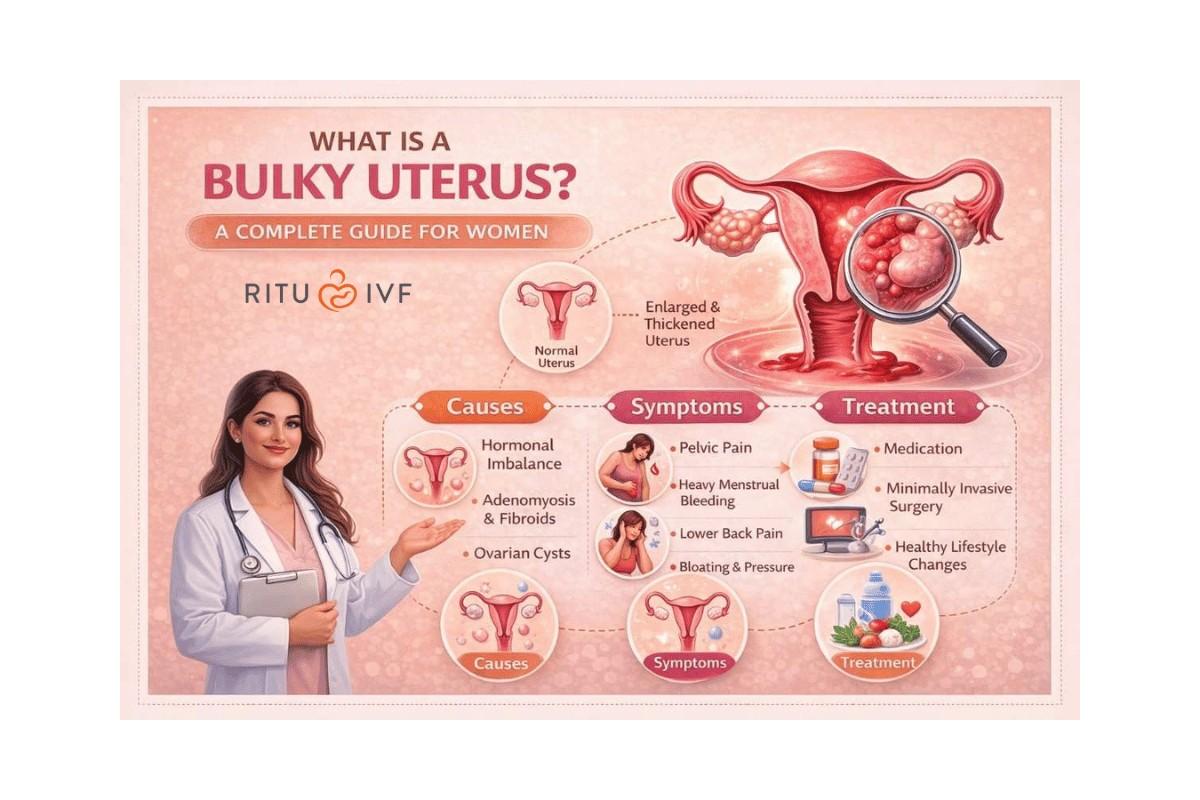
It can be disturbing and frightening for many women to see the words “bulky uterus” on an ultrasound report. A lot of them want to know about a thick uterus, if it is of any concern, and whether having a bulky uterus signals cancer. In fact, a bulky uterus is just an enlarged uterus, and it is a rather common diagnosis in gynaecology.
There are many reasons why a uterus may become bulky, such as fibroids, hormonal changes, adenomyosis, pregnancy, or infections. A slightly bulky uterus may not always create symptoms and may not need treatment. However, if the cervix looks thick and is associated with symptoms such as heavy periods, pelvic pain, or infertility, you should see a doctor for further evaluation.
Here, in this blog, we fully explain what it means to have a bulky uterus, its causes, various signs to look out for, when to go to the doctor, and treatment alternatives that are available.
When you know and understand your diagnosis, you can make sensible and informed decisions regarding your reproductive health.

Ready to take the next step toward parenthoo
[Book an Appointment Now]
What Does a Bulky Uterus Mean?
The uterus is a pear-shaped organ in the pelvis that helps with reproduction. It usually measures about 7–9 cm long, 4–5 cm wide, and 2–3 cm thick.
A bulky uterus occurs when it is a little bigger than normal.
When a doctor says “bulky uterus”, they are talking about an enlarged uterus that is bigger than what is normal for a person’s age and reproductive status.
It doesn’t always signify cancer or a serious illness. You need to always look at the symptoms and do more examination to find out what the problem is.
Causes of a Bulky Uterus
Let’s explore what often causes a big uterus.
- Uterine Fibroids(Being the Most Common Reason)
Fibroids are growths that arise in the wall of the uterus and are not malignant. They happen often, especially among women between thirty and fifty years of age.
Some of the symptoms are:
- Bleeding heavily throughout your period
- Pressure in the pelvis
- Urge to urinate frequently
- Experiencing pain in the back
- Having trouble getting pregnant
- Adenomyosis
Adenomyosis occurs when the uterine lining expands into its muscular wall, and it mostly affects women over 35.
This can lead to:
- Very painful periods along with heavy bleeding
- Long-term pain in the pelvis
- Physiological changes, such as being pregnant
The uterus normally grows larger in the early stages of pregnancy. If a woman of childbearing age has a large uterus, she should always rule out pregnancy first.
- Hormonal Imbalance
An excessive amount of estrogen can make the lining of the uterus grow temporarily.
- Any Infection
A severe infection can cause the uterus to enlarge, such as pelvic inflammatory disease.
Signs of a Bulky Uterus
Not everyone with a bulky uterus experiences symptoms. But when symptoms do happen, they could include:
| -Bleeding a lot -Periods that last more than seven days -Passing blood clots -Experiencing severe cramps |
| -Having pain in the lower abdomen -Feeling of fullness or pressure -Bloating -Having pain during sex |
| -Going to the bathroom a lot -Feeling constipated -Not being able to completely empty the bladder |
– Fertility Issues | -Difficulty Conceiving -Having miscarriages |
Is Having a Bulky Uterus Dangerous?
A bulky uterus is not potentially dangerous on its own, as it is only a sign. How serious it is depends on what caused it.
If you have any of the following, it might be concerning.
- Severe anemia caused by a lot of hemorrhage
- Pain in the pelvis that continues to persist
- Bleeding after menopause
- Rapid expansion of the uterus
Having an early assessment guarantees prompt intervention.
How Doctors Confirm a Diagnosis
Doctors diagnose by doing the following required examinations:
- Ultrasound: It is routinely performed to check for the size of uterus, any fibroids, adenomyosis, and the thickness of the endometrium.
- Examination of the pelvis: Gynaecologists check the uterine size manually.
- MRI: for detailed evaluation if necessary.
- Blood tests: To rule out anaemia and to check hormonal levels.
Ways to Treat a Bulky Uterus
The cause and severity of the problem will determine the treatment.
Medications include:
-Hormonal treatment
-Pills for birth control
-Treatment with progesterone
-Painkillers to reduce any discomfort
-Tranexamic acid for bleeding
-Iron supplements
Procedures include:
-Myomectomy: removal of fibroids while the uterus is preserved
-Embolization of the uterine artery: a minimally invasive procedure where the blood supply to fibroids is cut off, resulting in the shrinkage of fibroids
-Endometrial ablation: the uterine lining is targeted and destroyed to reduce the menstrual flow, performed in women with heavy bleeding.
-IUD with hormones: a levonorgestrel-releasing intrauterine device is placed to reduce bleeding and pain and prevent endometrial thickening.
-Hysterectomy: done in extreme instances, it involves the complete removal of the uterus
A lot of women can deal with their issues without surgery.
When Should You Go To The Doctor?
If you see any of the following signs and symptoms, get medical help:
- If bleeding heavily, your period pads are getting wet every hour
- If experiencing any severe pain in the pelvis
- Bleeding after menopause
- Sudden weight loss
- Discharge that smells bad
Early evaluation stops problems, and many women can avoid major surgeries from happening.
A Few Tips for Women with a Bulky Uterus
Medical care is crucial, but lifestyle support is also helpful:
- Keep your weight in check
- Exercise on a regular basis
- Take a lot of an iron-rich diet if you have excessive bleeding.
- Reduce stress
- Managing Vitamin D levels
- Have regular check-ups with a gynaecologist
Ready to take the next step toward parenthoo
[Book an Appointment Now]
Conclusion
A bulky uterus is a common condition among women that is usually easy to treat and manage. Knowing about what a bulky uterus signifies can help you feel less scared. Many women might not experience any significant signs and symptoms, but a few may develop symptoms such as bleeding heavily during their periods, fertility problems, and pain in the pelvis.
Modern medicine can address most diseases, whether they are a bulky uterus, fibroids, adenomyosis, or a cervix that looks bulky.
If you notice any of these symptoms, you should consult a gynaecologist right away to take care of your health.
Frequently Asked Questions
Q1. Does a bulky uterus mean having cancer?
No. A bulky uterus is often caused by non-cancerous (benign) disorders like fibroids. Cancer is not a common cause, especially in younger females. Women who are in their post-menopause period and are bleeding abnormally should be checked and be sure to rule out cancer.
Q2. Is it possible for a bulky uterus to revert to normal?
Yes, but it depends on what caused it. It’s because of hormones or due to pregnancy; it can go back to its normal size. You may notice fibroids getting smaller on their own after menopause, and in certain situations, treatment can assist in lessening symptoms and size.
Q3. Do women with a bulky uterus find it difficult to become pregnant?
Yes, at times, if the growth is caused by fibroids or adenomyosis, it could make it difficult to implant or increase the risk of miscarriage.
Q4. Having a mildly bulky uterus is normal?
Yes, a mildly bulky uterus can be typical for some women, especially after having a baby, before their periods or due to short-term alterations in hormones. Doctors may only suggest watching if there are no symptoms like significant bleeding or pain in the pelvis.
Q5. What does it indicate when an ultrasound report says “bulky uterus”?
A bulky uterus suggests that it’s a little bit bigger than usual. It is just a descriptive finding, not an illness. Fibroids, adenomyosis, pregnancy, hormonal changes, or an infection could be the cause of the growth. Further examinations and tests help identify the issue.
Q6. What does it mean when the cervix seems to be bulky?
The cervix, which is the lower part of the uterus, in a few females may appear bulky in ultrasound reports. Possible reasons include any infection, fibroids, cysts, changes in hormones, and cervical cancer, which is rare. If the cervix looks big, doctors could suggest testing for HPV and a Pap smear, pelvic exam, and Colposcopy (if necessary).