Quick Answer: Hyperspermia is a condition where a man ejaculates an unusually large volume of semen, usually more than 5.5 ml, compared with the normal 1.5 to 5 ml. It is rare, affecting around 4 to 5% of men, and is generally harmless. It does not make you more fertile. In fact, the extra fluid can dilute sperm, which may slightly lower fertility in some men.
If a semen analysis has shown that you have “hyperspermia,” you might be confused, or even quietly pleased, thinking more semen must mean more fertile. Let me clear that up right away, because it is one of the biggest misunderstandings about male fertility.
Hyperspermia simply means you produce more seminal fluid than average. It is uncommon, usually harmless, and rarely a sign of anything serious. But it is worth understanding properly, especially if you are trying to conceive.
In this guide I will explain what hyperspermia actually is, the difference between semen and sperm (which matters a lot here), what causes it, and its real effect on fertility. Clear, honest, and free of myths.
Need an Appointment?
CLICK HEREKey Takeaways
- Hyperspermia means higher than normal semen volume, usually above 5.5 ml.
- It is rare, affecting only about 4 to 5% of men.
- It is generally harmless and causes no health danger.
- More semen does not mean more fertile. The extra fluid can dilute sperm.
- It is diagnosed with a simple semen analysis.
- Treatment is only needed if there is an underlying cause or a fertility concern.
What Is Hyperspermia?
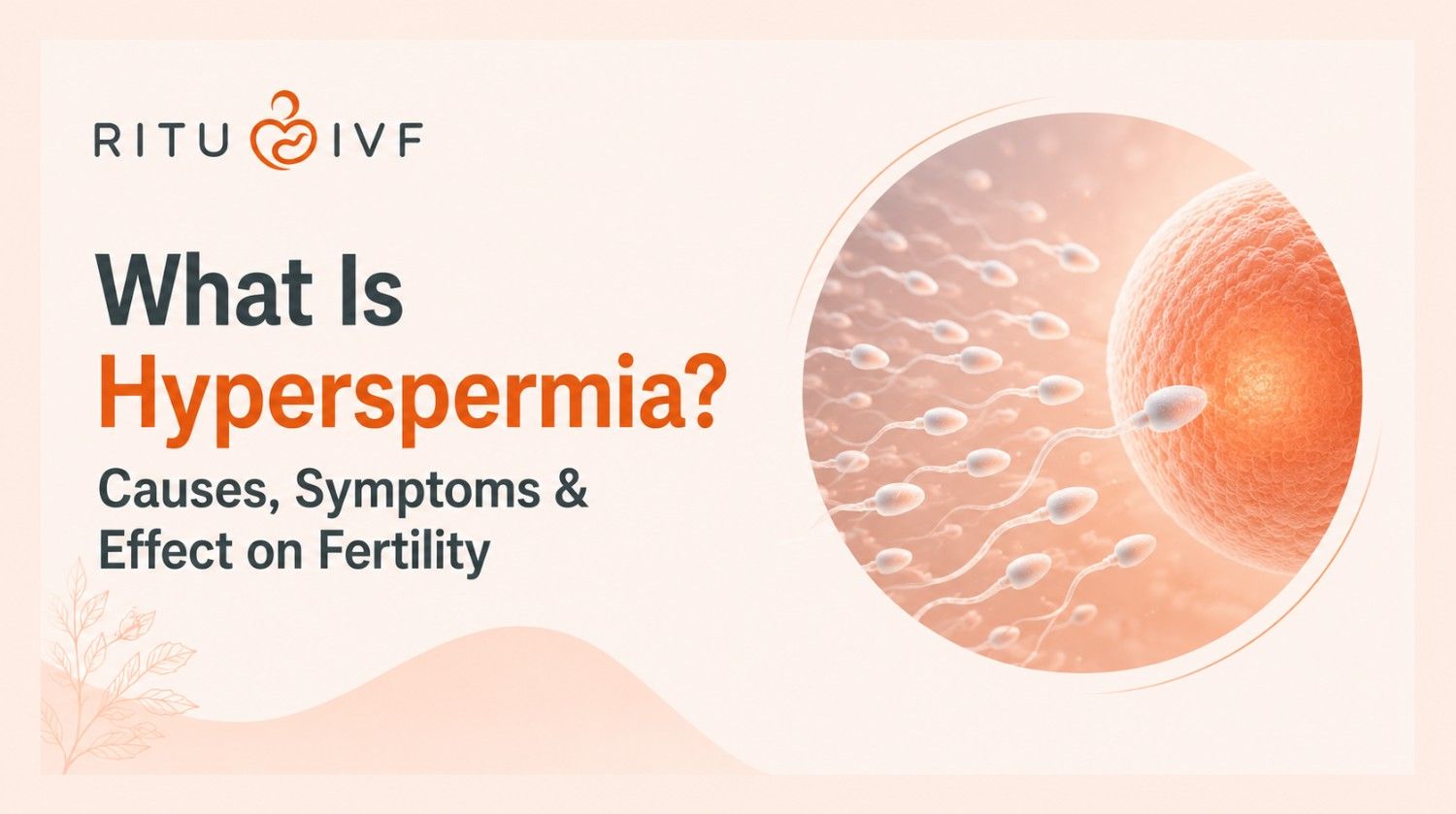
Hyperspermia is a condition in which a man ejaculates a larger volume of semen than normal. Medically, it is usually defined as a semen volume above 5.5 ml per ejaculation, though some studies use a slightly higher cut-off of around 6.3 ml.
It is the opposite of hypospermia, which means producing too little semen (under 1.5 ml). Both are simply variations in semen volume, and neither is inherently dangerous.
Most men with hyperspermia feel completely healthy and only discover it during a semen analysis, often when investigating fertility. On its own, it is not a disease and not a threat to your health.
What Is a Normal Semen Volume?
To understand hyperspermia, it helps to know what “normal” looks like. A typical, healthy ejaculation produces between 1.5 and 5 ml of semen, which is roughly a third of a teaspoon to one teaspoon.
Here is a simple reference:
| Condition | Semen volume per ejaculation |
|---|---|
| Hypospermia (low) | Below 1.5 ml |
| Normal range | 1.5 to 5 ml |
| Hyperspermia (high) | Above 5.5 ml |
Semen volume naturally varies from day to day, depending on things like how hydrated you are and how long since your last ejaculation. So one high reading does not mean hyperspermia. It is the consistently high volume that matters.
Semen vs Sperm: The Difference That Matters Here
This is the single most important thing to understand, and it is where most confusion comes from. Semen and sperm are not the same thing.
- Sperm are the tiny cells that fertilise the egg. Fertility depends heavily on their number, movement, and shape.
- Semen is the fluid that carries the sperm. It is made mostly by the prostate and seminal vesicles.
Hyperspermia is about too much semen (the fluid), not too much sperm (the cells). This distinction is crucial, because it explains why more semen does not mean more fertile. You can have a large volume of fluid with a perfectly normal, or even low, number of sperm inside it.
Hyperspermia vs Hypospermia
These two terms describe opposite ends of the semen-volume range. Here is the difference at a glance.
| Feature | Hyperspermia | Hypospermia |
|---|---|---|
| Meaning | Too much semen | Too little semen |
| Volume | Above 5.5 ml | Below 1.5 ml |
| How common | Rare (4 to 5% of men) | More common |
| Fertility effect | Can dilute sperm | Can reduce sperm delivered |
| Usually harmful? | No | No, but worth checking |
Both are usually harmless on their own, but both can matter when you are trying to conceive, just in different ways.
How Common Is Hyperspermia?
Hyperspermia is genuinely uncommon. Studies suggest it affects only around 4 to 5% of men. One large study from India found fewer than 4% of men had a high semen volume.
So if you have it, you are in a small minority, but there is nothing frightening about that. It is simply a less common variation in how the male reproductive system works.
Symptoms and Signs of Hyperspermia
Most men with hyperspermia have no noticeable symptoms at all. The main sign is simply producing more fluid than usual during ejaculation.
Some men may occasionally notice:
- A visibly larger volume of semen than before
- Thicker or more concentrated-looking semen
- Slight discomfort or delay with ejaculation, in some cases
- No symptoms whatsoever, which is the most common situation
Because there is usually no pain or obvious problem, most men only find out they have hyperspermia when they get a semen analysis for another reason, often while trying to conceive.
What Causes Hyperspermia?
In many cases, there is no clear cause, and it is simply a natural variation. When a cause can be found, the common ones include:
- Hormonal imbalance. Higher levels of testosterone can increase semen production.
- Prostate or seminal vesicle issues. Inflammation or infection in these glands can raise the volume of seminal fluid.
- Long periods of abstinence. Going a long time between ejaculations can temporarily increase semen volume.
- High fluid intake or diet. Being very well hydrated can slightly increase fluid volume.
- Genetic variation. For some men, it simply runs in how their body works.
Doctors sometimes divide it into primary hyperspermia (no identifiable cause, a natural variation) and secondary hyperspermia (linked to an underlying issue like infection or hormonal imbalance).

Ready to take the next step toward parenthood
Does Hyperspermia Affect Fertility?
This is the key question, and the honest answer is: it can, but usually only mildly.
Hyperspermia does not damage sperm or harm your health. The issue is dilution. When there is a large volume of fluid, the sperm can become more spread out, lowering the sperm concentration. If your sperm count is already on the lower side, this extra dilution can make it a little harder to conceive.
For many men with hyperspermia, fertility is completely fine. The concern only arises when the high volume is combined with a low sperm count or poor sperm movement. That is exactly why a full semen analysis matters, because it looks at volume and sperm quality together, giving the complete picture.
If a low sperm count turns out to be part of the problem, it is very manageable. Here is helpful information on the causes and treatment of low sperm count.
Myth: Is More Semen Better for Fertility?
No. This is a widespread myth, and it is worth stating plainly. A larger volume of semen does not make you more fertile, and it is not a sign of “stronger” sperm.
Fertility depends on the sperm inside the semen, their number, their movement, and their shape, not on how much fluid there is. In fact, as explained above, too much fluid can slightly work against you by diluting the sperm. So if anyone tells you that ejaculating more means better fertility, that simply is not how it works.
How Is Hyperspermia Diagnosed?
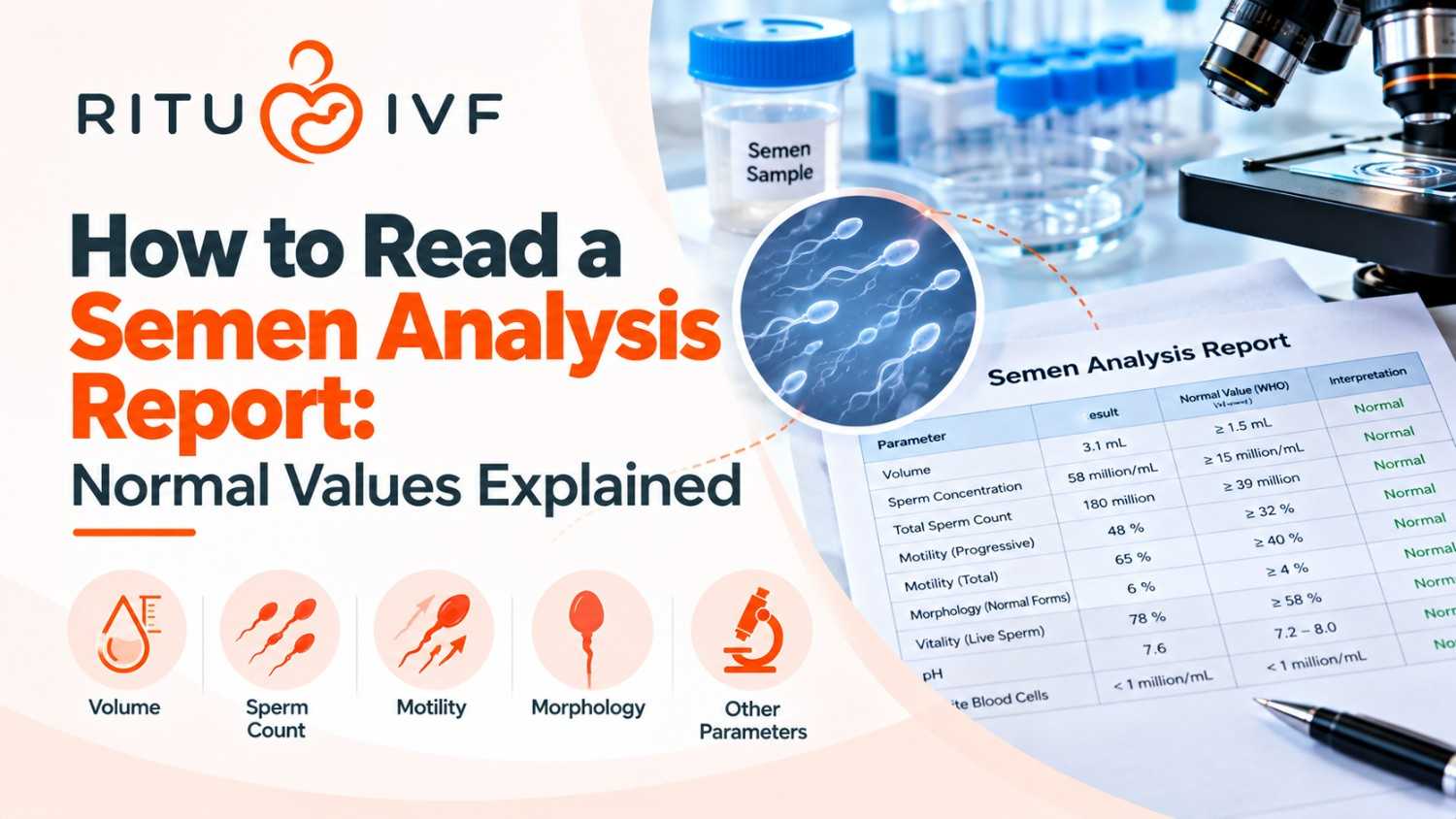
Hyperspermia is diagnosed with a semen analysis, a simple and painless test. A sample is collected and examined in a lab to measure several things:
- Semen volume, to confirm whether it is above the normal range
- Sperm count, or concentration
- Sperm motility, meaning how well they move
- Sperm morphology, meaning their shape
Because semen volume varies naturally, doctors often repeat the test to confirm a consistent pattern. The test also checks whether the high volume is affecting sperm concentration, which is what really matters for fertility.
Treatment Options for Hyperspermia
Here is the reassuring part: most men with hyperspermia need no treatment at all. If it is not affecting your health or fertility, it is simply left alone.
Treatment is only considered when there is an underlying cause or a fertility concern. Options may include:
- Treating the underlying cause. If an infection, inflammation, or hormonal imbalance is behind it, addressing that resolves the issue.
- Fertility support. If hyperspermia is diluting a low sperm count and making conception difficult, techniques like IUI or IVF can help by concentrating and placing healthy sperm effectively. You can explore male infertility treatment options for this.
- Lifestyle review. Sometimes simple adjustments and a proper check are all that is needed.
The right approach depends entirely on your individual results, which is why a proper evaluation comes first.
Doctor’s Advice from Dr. Ritu Agarwal
“Many men come to me either worried about hyperspermia, or mistakenly proud of it, thinking more semen means more fertile. I gently explain that volume is not the point. What counts is the sperm inside. Hyperspermia by itself is almost always harmless, and I only act on it when a semen analysis shows it is diluting a low sperm count. In most cases, my main job is simply to reassure the couple and look at the full fertility picture together.” — Dr. Ritu Agarwal
As always, I will be honest: hyperspermia alone is rarely a barrier to having a child. But if you have been trying to conceive without success, do not focus on semen volume in isolation. Get a complete assessment of both partners, because that is what actually gives you answers.
When Should You See a Doctor?
Hyperspermia on its own is not an emergency. But it is worth seeing a doctor if:
- You have been trying to conceive for 12 months without success, or 6 months if your partner is over 35
- You notice pain, discomfort, or signs of infection with ejaculation
- Your semen analysis shows a low sperm count alongside high volume
- You simply want clarity and reassurance about your fertility
A specialist can check whether the high volume is affecting anything and guide you from there. Most of the time, the news is reassuring.
Summary and Next Step
Hyperspermia means producing more semen than normal, usually above 5.5 ml. It is rare, harmless to your health, and, importantly, does not make you more fertile. The extra fluid can slightly dilute sperm, which may lower fertility only when the sperm count is already low.
The condition is easily assessed with a semen analysis, and most men need no treatment at all. If you are trying to conceive, the smart move is a full fertility check rather than worrying about semen volume alone.
Frequently Asked Questions
What is hyperspermia?
Hyperspermia is a condition where a man ejaculates more semen than normal, usually above 5.5 ml compared with the typical 1.5 to 5 ml. It is rare and generally harmless.
Does hyperspermia make you more fertile?
No. More semen does not mean more fertile. Fertility depends on the sperm inside the fluid, not the fluid volume. Extra fluid can actually dilute sperm.
Does hyperspermia affect fertility?
It can, but usually only mildly. The larger volume can dilute sperm concentration, which may make conception harder if the sperm count is already low.
How common is hyperspermia?
It is uncommon, affecting only around 4 to 5% of men. It is much rarer than low semen volume (hypospermia).
How is hyperspermia diagnosed?
Through a semen analysis, which measures semen volume along with sperm count, movement, and shape. The test is often repeated to confirm a consistent pattern.
Is hyperspermia dangerous?
No. Hyperspermia does not harm your health. It is only worth attention if it affects fertility or if there is an underlying infection or hormonal cause.
What causes hyperspermia?
Often there is no clear cause. When there is one, it may be a hormonal imbalance, prostate or seminal vesicle inflammation, long abstinence, or high fluid intake.
Can I still have children with hyperspermia?
Yes, most men with hyperspermia can father children normally. If it is combined with a low sperm count, treatments like IUI or IVF can help.
Medical Disclaimer: This article is for general information and awareness only. It is not a substitute for personal medical advice. Please consult a qualified fertility specialist or andrologist for guidance specific to your situation.