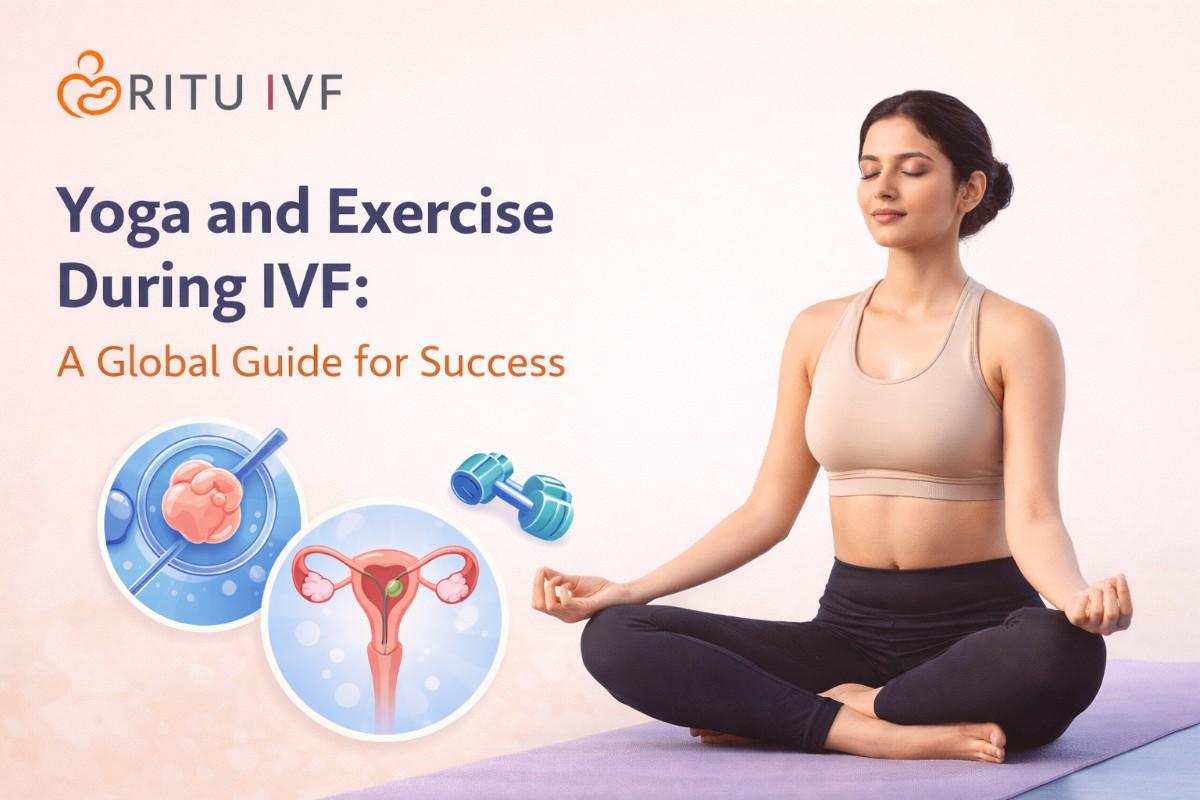
The decision to start an IVF cycle comes with a lot of preparation, both medical and emotional. While your clinical team handles the protocols and lab work, many patients wonder what they can do at home to help their bodies succeed. Among the various lifestyle adjustments, understanding the yoga benefits in IVF and the role of exercise during IVF has become a key area of focus for improving outcomes.
The goal of staying active is not about fitness in the traditional sense. Instead, it is about managing the physical demands of hormonal changes, keeping blood circulation optimal, and maintaining a calm nervous system. When practiced correctly, yoga for IVF success becomes a supportive tool. By incorporating specific routines of yoga in IVF treatment, you can work alongside your medical protocol rather than adding more stress to your body.

Ready to take the next step toward parenthoo
[Book an Appointment Now]
The Science: How Yoga Benefits the IVF Process
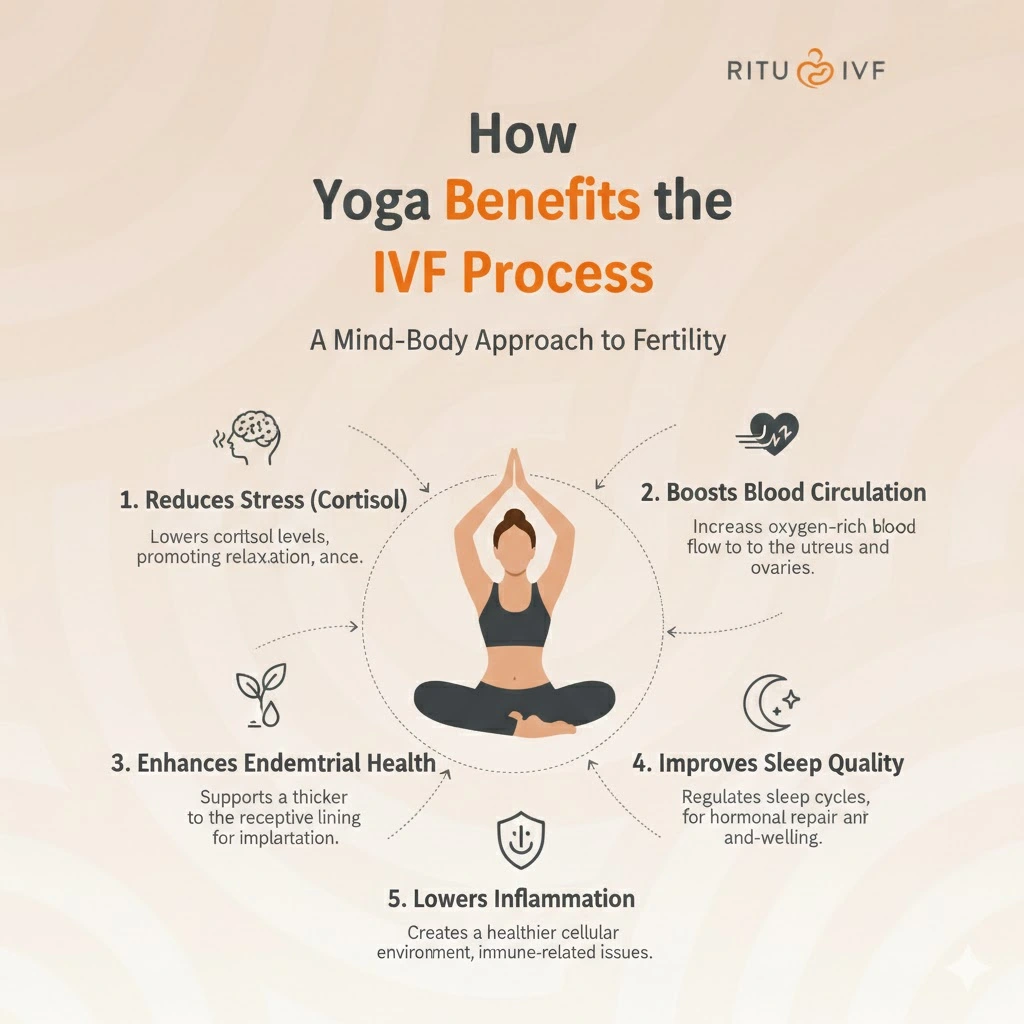
To understand why movement is so critical during a fertility cycle, we have to look at how the body responds to stress and hormonal stimulation. This is where the specific yoga benefits in IVF become a significant biological advantage.
1. Managing the Stress Response
When you are under pressure, your body produces cortisol. High levels of cortisol can interfere with the delicate balance of reproductive hormones required for egg maturation and uterine receptivity. Practicing yoga in IVF treatment helps regulate the nervous system, shifting the body out of a high-stress state. This relaxation ensures that your internal environment remains stable and supportive of the clinical protocols.
2. Improving Blood Flow to Reproductive Organs
For an embryo to successfully implant, the uterine lining needs a rich supply of oxygenated blood. Specific movements in yoga for IVF success are designed to encourage circulation toward the ovaries and uterus. By improving this pelvic blood flow, you are helping the body deliver essential nutrients and medications more efficiently to the target areas.
3. Supporting the Endocrine System
The endocrine system governs the release of hormones that control your cycle. When considering exercise during IVF, the goal is to support the glands responsible for these hormones without overexerting the body. Controlled breathing and gentle stretching help maintain a balanced hormonal environment, making the body more receptive to the treatment.
4. Improving Sleep Quality and Hormonal Repair
Quality sleep is a biological necessity during a fertility cycle, as this is when the body undergoes cellular repair and hormonal regulation. The physical and emotional toll of exercise during IVF needs to be balanced with deep rest. Yoga helps lower the heart rate and prepare the brain for restorative sleep. Better sleep patterns lead to more stable levels of melatonin and growth hormones, both of which play a subtle but important role in follicle development and overall yoga for IVF success.
5. Reducing Systemic Inflammation
Chronic inflammation in the body can sometimes create a hostile environment for an embryo. One of the less discussed yoga benefits in IVF is its ability to lower inflammatory markers in the blood. By engaging in low-impact, mindful movement, you help the body manage its immune response. This creates a calmer, more “receptive” internal state, which is a key goal of yoga in IVF treatment, especially as the body prepares for the critical implantation window.
Phase-Specific Guidelines: Navigating Your IVF Cycle
The effectiveness of exercise during IVF depends entirely on timing. Because your body goes through distinct biological changes during a cycle, your physical activity must adapt accordingly.
1. The Ovarian Stimulation Phase
During this phase, your ovaries are working hard to produce multiple follicles, causing them to enlarge significantly.
The Approach: This is the time to prioritize yoga in IVF treatment that is grounding and gentle. Avoid any high-impact movements, heavy lifting, or intense abdominal twisting.
Safety Note: Intense physical strain during stimulation carries a risk of ovarian torsion, where the ovary twists on itself. Stick to slow walks and restorative stretching to stay active safely.
2. The Egg Retrieval Recovery
After the retrieval procedure, your body needs a few days of dedicated rest. The focus here is on healing and hydration rather than active movement.
The Approach: Allow yourself 48 to 72 hours of minimal activity. Light stretching or very short, slow walks can help prevent stiffness and promote circulation as your body recovers from the minor procedure.
3. The Embryo Transfer and the Two-Week Wait
This is perhaps the most sensitive period for yoga for IVF success. The goal is to keep the body’s core temperature stable and the nervous system calm to support implantation.
The Approach: Focus on “Nidra” yoga or guided meditation. Avoid “Hot Yoga” or any exercise that causes heavy sweating or exhaustion.
The Goal: You want to encourage blood flow to the uterus without causing systemic stress. Low-impact movement, like a gentle 15-minute stroll, is often recommended to keep the mind at ease during this waiting period.
Top 5 Yoga Poses for IVF Success
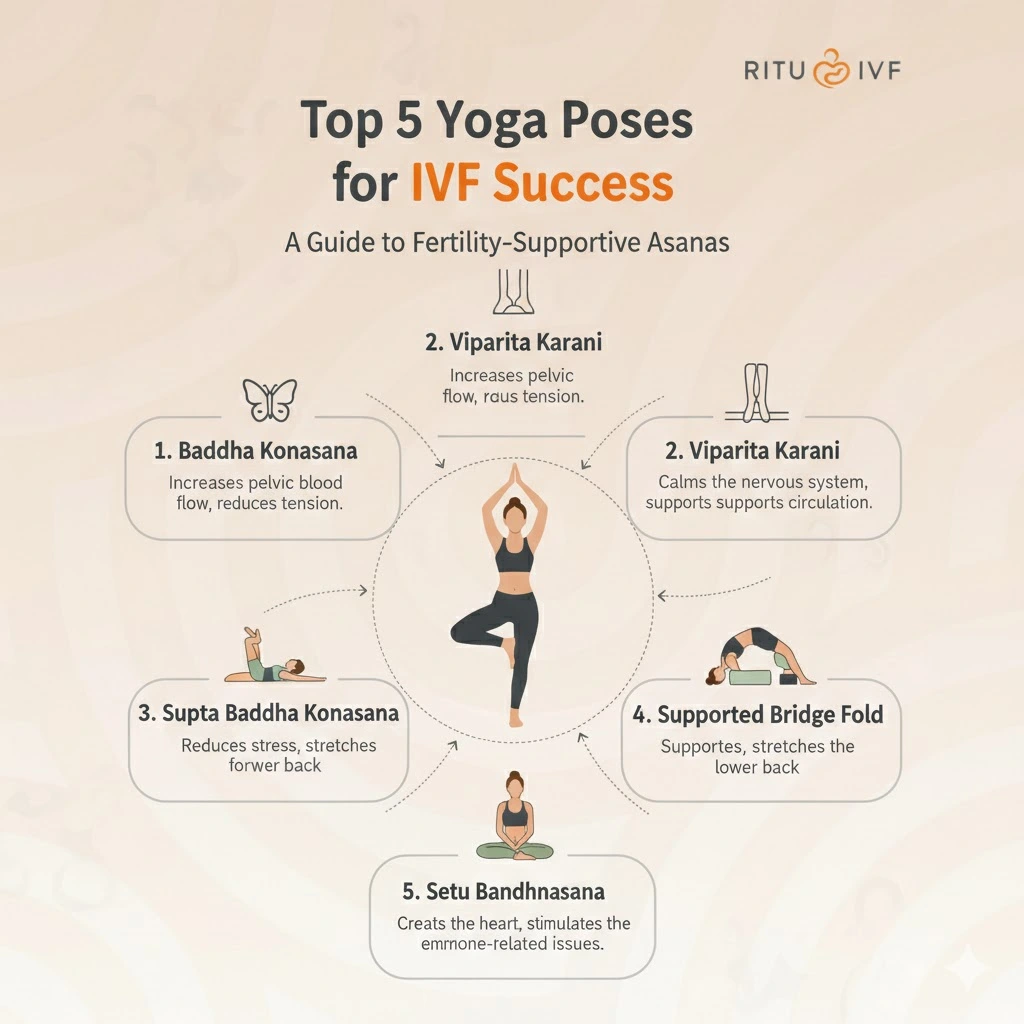
To get the most out of yoga in IVF treatment, it is important to choose poses that open the pelvic area and calm the mind without putting pressure on the abdomen. Here are the five most recommended asanas for supporting your journey.
1. Baddha Konasana (Bound Angle or Butterfly Pose)
This pose is one of the most effective for pelvic health. By bringing the soles of the feet together and letting the knees drop out, you gently stretch the inner thighs and open the hips.
The Benefit: It increases blood circulation to the pelvic floor and ovaries, which is a major part of yoga for IVF success. It is a great way to relieve the physical tension often felt in the lower body during hormonal stimulation.
2. Viparita Karani (Legs-up-the-Wall Pose)
This is a deeply restorative pose that helps redirect circulation toward the core. By lying on your back with your legs resting vertically against a wall, you allow the heart to pump blood more easily to the reproductive organs.
The Benefit: It is widely recognized for its ability to lower blood pressure and reduce anxiety. Many find this to be the perfect practice during the “two-week wait” to stay grounded and calm.
3. Supta Baddha Konasana (Reclined Bound Angle Pose)
This is a more relaxed version of the butterfly pose, usually done with the support of a bolster or pillow along the spine.
The Benefit: It allows the chest and abdomen to open fully, encouraging deep diaphragmatic breathing. This helps in balancing the endocrine system and is one of the key yoga benefits in IVF for managing the emotional fluctuations of the cycle.
4. Paschimottanasana (Supported Forward Fold)
In this pose, you sit with your legs extended and fold forward, resting your head and torso on a large pillow.
The Benefit: It stretches the lower back and hamstrings, which can become tight due to bloating. More importantly, it has a profound cooling effect on the nervous system, making it an excellent choice for exercise during IVF when you need to decompress.
5. Setu Bandhasana (Supported Bridge Pose)
By placing a soft block or rolled-up blanket under your lower back while lying down, you create a gentle lift in the hips.
The Benefit: This pose helps open the heart and stimulates the thyroid gland. Since thyroid health is closely linked to reproductive hormone balance, this pose is a staple in fertility-focused yoga routines.
Need an Appointment?
CLICK HEREImportant Considerations: What to Avoid During Your Cycle
While the yoga benefits in IVF are significant, knowing what to limit is just as important as knowing what to practice. Because the body is in a sensitive state—especially during the ovarian stimulation and post-transfer phases—certain activities should be paused to ensure the safety of the cycle and the health of the ovaries.
1. High-Impact and Jarring Movements
Activities like running, jogging, or high-intensity aerobics should be avoided, particularly as you approach the egg retrieval. As the ovaries enlarge to accommodate multiple follicles, they become heavier and more prone to shifting. Jarring movements increase the risk of discomfort and, in rare cases, medical complications that could disrupt the cycle.
2. Intense Core Compression and Twisting
Heavy abdominal exercises, such as crunches, intense Pilates, or deep spinal twists, should be sidelined. The goal of yoga in IVF treatment is to create space and softness in the pelvic region. Putting excessive pressure on the midsection can cause unnecessary strain on the internal organs and may lead to discomfort during the stimulation phase.
3. Inversion Poses (Going Upside Down)
While inversions like headstands or handstands are common in advanced yoga, they are generally not recommended during an IVF cycle. Drastic changes in body orientation can alter blood pressure and internal positioning. Instead, stick to “passive inversions” like resting your legs against a wall, which provides the benefits without the physical risk.
4. Heavy Weightlifting and Power Training
Lifting heavy weights or engaging in powerlifting can cause significant spikes in intra-abdominal pressure. This pressure can interfere with the blood flow patterns you are trying to optimize through yoga for IVF success. It is better to focus on body-weight movements or light resistance that doesn’t cause you to strain or hold your breath.
5. Excessive Heat and Hot Yoga
Maintaining a stable and moderate core body temperature is vital for egg development and successful embryo implantation. Practicing in a heated room, such as Bikram or Hot Yoga, can lead to overheating, dehydration, and increased heart rate. Clinical experts suggest staying in a temperature-controlled environment to ensure the body remains in a calm, homeostatic state throughout the exercise during IVF process.
Frequently Asked Questions
1. Is walking enough exercise during my IVF cycle?
Yes. In fact, clinical experts often recommend walking as the primary form of exercise during IVF. It provides the cardiovascular benefits needed for optimal blood flow without the orthopedic or torsion risks associated with higher-impact sports. A steady, 20-minute stroll helps maintain circulation to the uterine lining while keeping stress levels manageable.
2. Can yoga improve the thickness of the uterine lining?
Indirectly, yes. By improving pelvic blood flow and reducing the vasoconstriction (narrowing of blood vessels) caused by chronic stress, yoga helps the body deliver essential hormones like estrogen and progesterone to the endometrium. This supports the development of a healthy, receptive lining for implantation.
3. When should I stop yoga before the embryo transfer?
Most protocols suggest continuing restorative yoga in IVF treatment right up until the day before the transfer. On the day of the procedure and for the following 48 hours, it is generally advised to focus on total rest or very light stretching. You can resume gentle, non-strenuous yoga once your doctor gives you the green light, usually after the initial implantation window.
4. Does yoga help with PCOS-related IVF cycles?
Yes. For patients with Polycystic Ovary Syndrome (PCOS), yoga can be particularly beneficial. It helps in managing insulin sensitivity and balancing testosterone levels, both of which are key factors in egg quality and overall yoga for IVF success. The stress-reduction aspect also helps regulate the adrenal glands, which are often overactive in PCOS cases.
5. Is it safe to do “Yoga Nidra” during the two-week wait?
Absolutely. Yoga Nidra, or “yogic sleep,” is a form of guided meditation that is highly recommended. It involves no physical strain and focuses entirely on deep relaxation and visualization. This is perhaps the best form of yoga in IVF treatment for the period following the embryo transfer, as it keeps the mind occupied and the body in a state of deep rest.