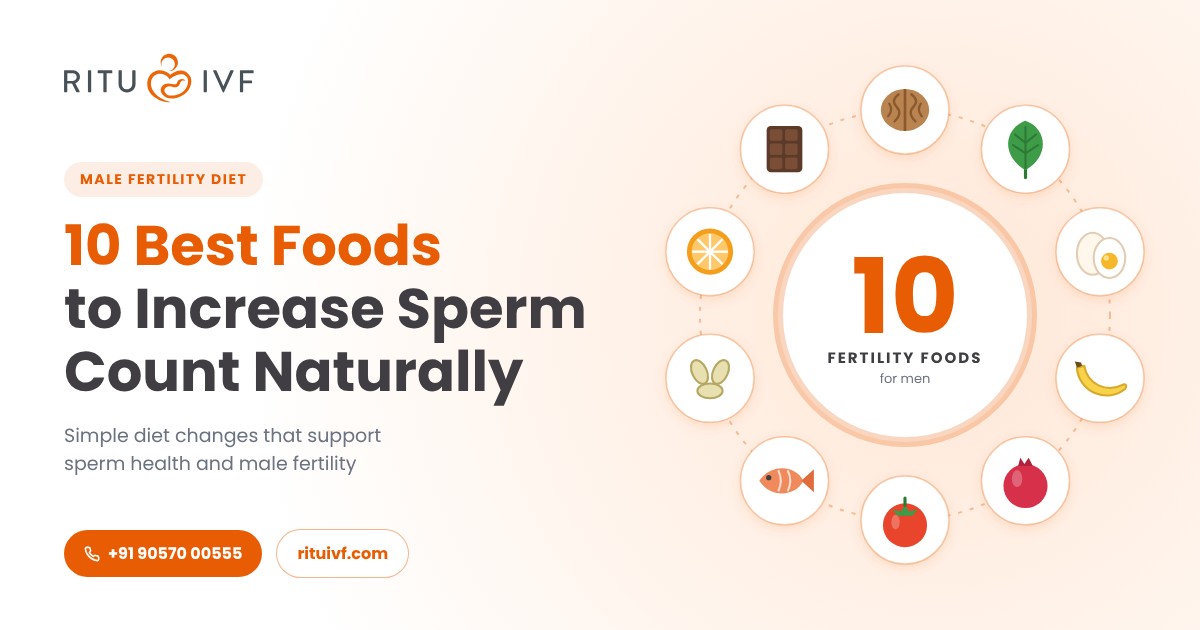
Quick Answer: Foods rich in zinc, folate, omega-3 fatty acids, and antioxidants may support healthy sperm count and quality. Good choices include pumpkin seeds, walnuts, spinach, citrus fruits, lentils, and fatty fish. A balanced diet helps, but it is not a guaranteed cure. If your sperm count is low, the best step is a proper check with a specialist.
When a couple is trying to conceive, male fertility matters just as much as female fertility. In fact, male factors contribute to a large share of fertility difficulties. One question men often ask me is simple: can food really help?
The honest answer is yes, to a point. A good diet can support sperm health, but it works best as one part of a healthy lifestyle, not as a magic fix. In this guide I will share the foods most linked to better sperm health, explain what the evidence actually shows, and tell you when it is time to see a doctor.
Need an Appointment?
CLICK HEREHow Does Food Affect Sperm Health?
Sperm production depends heavily on certain nutrients, so your diet genuinely plays a role. Sperm cells need zinc to develop, antioxidants to protect them from damage, and healthy fats for their structure.
A key problem for sperm is oxidative stress, which is damage caused by unstable molecules called free radicals. Foods rich in antioxidants, like vitamin C, vitamin E, and selenium, help reduce this damage. On the other hand, too much junk food, sugar, alcohol, and processed food can increase oxidative stress and lower sperm quality.
So the idea is simple. Nourish the body with the right foods, and you give sperm production the support it needs over time.
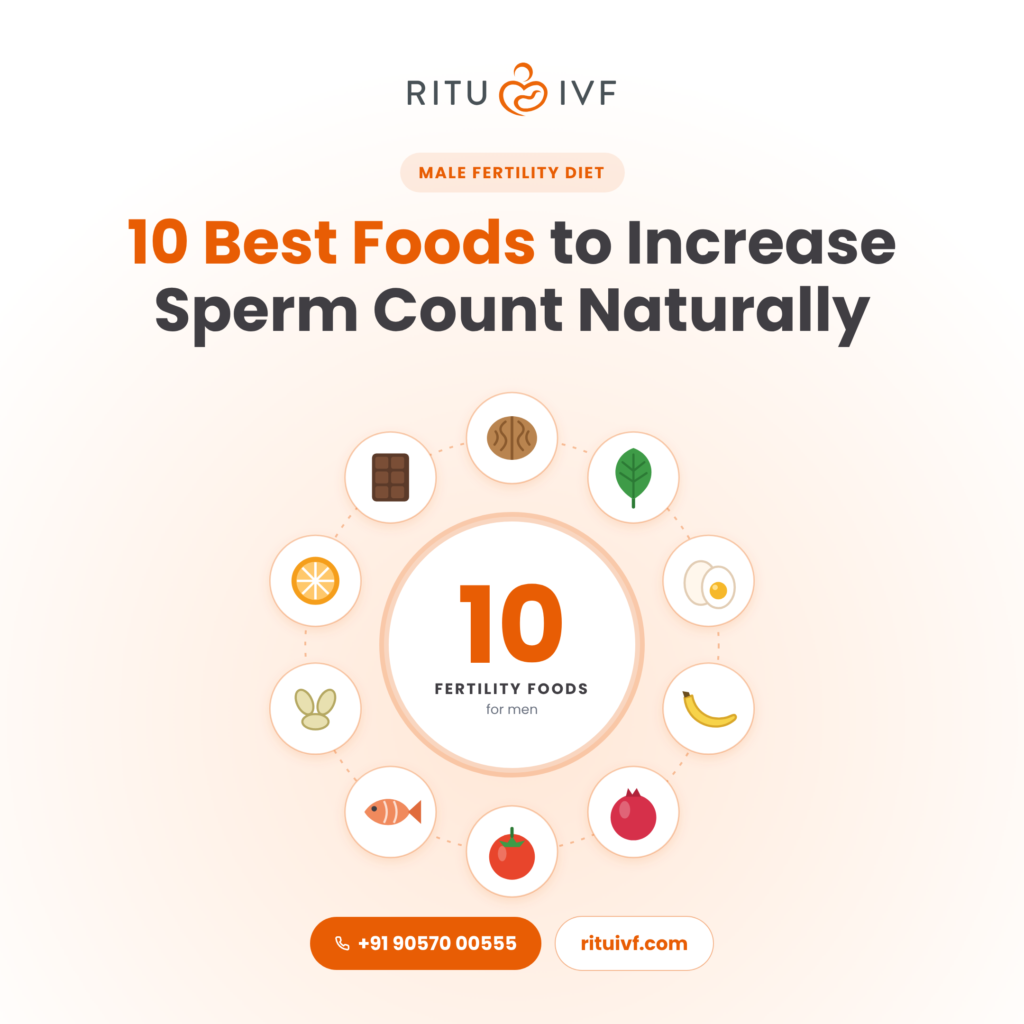
10 Foods That May Help Increase Sperm Count
Here are ten nutrient-rich foods commonly linked with better sperm health. Including a variety of them in a balanced diet is more useful than relying on any single one.
1. Pumpkin Seeds
Pumpkin seeds are rich in zinc, a mineral essential for sperm production and testosterone balance. Low zinc levels have been linked to reduced sperm quality, so these little seeds are an easy, healthy snack to add.
2. Spinach
Spinach is high in folate, also called vitamin B9, which supports healthy sperm formation. Low folate levels have been associated with abnormal sperm, so leafy greens are a smart daily addition.
3. Walnuts
Walnuts are a standout for male fertility. They contain omega-3 fatty acids, which support sperm structure and movement, along with antioxidants like vitamin E that help protect sperm from damage.
4. Dark Chocolate
Dark chocolate, in moderation, contains antioxidants and an amino acid called L-arginine, which has been linked with sperm count and motility. A small amount can be a pleasant, fertility-friendly treat.
5. Citrus Fruits
Oranges, lemons, and grapefruit are rich in vitamin C, a powerful antioxidant that helps protect sperm from oxidative damage. Even adding fresh lemon to your water is an easy way to get more.
6. Lentils
Lentils are high in folate, protein, and fibre, all of which support hormone balance and healthy sperm. They are a staple in Indian kitchens, making them an easy everyday choice.
7. Avocado
Avocados are rich in vitamin E, zinc, and folate, a useful combination for sperm quality. Vitamin E in particular acts as an antioxidant that helps protect sperm cells.
8. Fatty Fish
Fish like salmon, sardines, and mackerel are excellent sources of omega-3 fatty acids, which support sperm count, movement, and structure. For vegetarians, walnuts and flax seeds offer plant-based omega-3.
9. Fenugreek (Methi)
Fenugreek, known as methi in India, is a traditional ingredient valued for overall health. It is often associated with supporting male vitality, and it is easy to include in everyday cooking.
10. Pomegranate
Pomegranate is rich in antioxidants that help reduce oxidative damage to sperm cells. A glass of fresh pomegranate juice is a simple, antioxidant-rich addition to the diet.
Need an Appointment?
CLICK HEREWhat the Evidence Actually Says
It is important to be honest here, because many articles overpromise. A nutritious diet can support sperm health, but it is not a guaranteed cure for low sperm count.
Research suggests that nutrients like zinc and folate may improve certain sperm parameters, such as concentration. However, recent reviews have found that the overall effect of diet and supplements on actual pregnancy and live birth rates is still not strongly proven. In short, good food helps and is always worth doing, but it is a support, not a certainty.
This is why diet should be seen as one healthy habit among several, rather than a standalone treatment.
Foods and Habits to Limit
What you avoid matters as much as what you eat. To protect sperm health, it helps to cut down on:
- Processed and fried foods, which increase oxidative stress
- Excess sugar and sugary drinks
- Alcohol, which can lower testosterone and sperm quality
- Excess caffeine, best kept in moderation
- Smoking and tobacco, which harm sperm significantly
Reducing these often makes a bigger difference than any single “superfood.”
Lifestyle Matters as Much as Diet
Food is only one piece of the puzzle. For healthy sperm, your overall lifestyle plays an equally important role, sometimes even more.
Maintaining a healthy weight, exercising regularly, managing stress, getting enough sleep, and avoiding excess heat to the groin all support sperm health. Quitting smoking and limiting alcohol are among the most powerful changes you can make. A good diet works best alongside these habits, not instead of them.
When Should You See a Doctor?
Diet and lifestyle are a great starting point, but they have limits. If you have been trying to conceive without success, food alone may not be enough.
You should consider seeing a specialist if you have been trying for 12 months without success, or 6 months if your partner is over 35. A simple semen analysis can check your sperm count, movement, and shape, and reveal whether there is a specific issue. If a problem is found, there are effective treatments, and you can read more about the causes and treatment of low sperm count.
A Note From the Clinic
I always tell men that improving their diet is a positive, worthwhile step, but they should not pin all their hopes on food alone. Sperm health is influenced by many factors, and some causes of low sperm count need proper medical evaluation.
If you are trying for a baby, the wisest approach is to eat well, live healthily, and get a check-up rather than waiting indefinitely. Outcomes vary from person to person, and your own situation depends on your overall health and medical history.
Summary
A diet rich in zinc, folate, omega-3 fatty acids, and antioxidants may support healthy sperm count and quality. Pumpkin seeds, walnuts, spinach, citrus fruits, lentils, and fatty fish are all good additions to a balanced diet.
Just remember that food is a support, not a guaranteed cure. Alongside a healthy lifestyle, it gives your sperm health the best natural foundation. And if conceiving is proving difficult, a simple check with a specialist is the smartest next step.
Concerned About Your Fertility?
If you have been trying to conceive without success, a simple evaluation can give you clear answers rather than guesswork. Diet is a good start, but a proper check tells you what is really going on.
To understand your fertility, book a consultation with Dr. Ritu Agarwal through our contact page, or call +91 9057000555.
Frequently Asked Questions
Which foods increase sperm count the most?
Foods rich in zinc, folate, omega-3, and antioxidants are most often linked with better sperm health. Good examples include pumpkin seeds, walnuts, spinach, citrus fruits, lentils, and fatty fish.
How long does it take for diet to improve sperm?
Sperm takes roughly two to three months to develop, so dietary changes usually need at least this long to show any effect. Consistency over time matters more than quick fixes.
Can food alone cure low sperm count?
No. A good diet can support sperm health, but it is not a guaranteed cure. If your sperm count is low, you should see a specialist, as some causes need medical treatment.
Which fruit is good for sperm health?
Antioxidant-rich fruits like pomegranate, bananas, and citrus fruits are commonly linked with supporting sperm health, mainly by reducing oxidative damage.
At what age is sperm count highest?
Sperm count and quality are generally at their best in a man’s 20s to early 30s, and tend to decline gradually after the mid-30s.
What lifestyle changes help sperm count?
Maintaining a healthy weight, exercising, managing stress, sleeping well, quitting smoking, limiting alcohol, and avoiding excess heat to the groin all support sperm health alongside a good diet.
Medical Disclaimer: This article is for general information and awareness only. It is not a substitute for personal medical advice. Please discuss your specific situation with a qualified fertility specialist. This article was prepared with the help of research and digital/AI tools and reviewed for accuracy by Dr. Ritu Agarwal.