Quick Answer: To stop vomiting in pregnancy, eat small frequent meals, keep plain crackers by your bed, sip fluids slowly through the day, and try ginger. Avoid strong smells, greasy food, and an empty stomach. Most morning sickness is harmless and usually eases by weeks 12 to 16. If you cannot keep any fluids down, are losing weight, or feel faint, see a doctor promptly, as this may be a severe form called hyperemesis gravidarum.
That queasy, stomach-churning feeling in early pregnancy can take over your whole day. One moment you feel fine, and the next the smell of cooking sends you rushing to the bathroom. For many women, vomiting is one of the first and most tiring parts of pregnancy.
Here is the reassuring part. Morning sickness, though unpleasant, is usually a normal and temporary phase. It rarely harms your baby, and there are many safe, simple ways to feel better.
In this guide I will explain why it happens, what actually helps, which foods and drinks to reach for, and the clear signs that mean it is time to call your doctor.
Key Takeaways
- Vomiting affects around 70% of pregnant women, so you are far from alone.
- It usually starts around weeks 5 to 6 and eases by weeks 12 to 16.
- Small frequent meals, ginger, and steady hydration are the safest first steps.
- Despite the name, it can happen any time of day, not just the morning.
- Vitamin B6 is a recognised first-line option, but take it only on your doctor’s advice.
- Severe, constant vomiting may be hyperemesis gravidarum, which needs medical care.
Your Journey to Motherhood Starts Here
“With advanced fertility care and personalized support every step of the way.”
Contact UsWhy Does Vomiting Happen During Pregnancy?
The main cause is the surge of pregnancy hormones in early pregnancy, especially a hormone called hCG (human chorionic gonadotropin) and rising oestrogen. These peak in the first trimester, which is exactly when vomiting is at its worst.
A few other things can make it stronger:
- A heightened sense of smell, so certain odours trigger nausea
- An empty stomach, which often makes it worse
- Slower digestion caused by hormonal changes
- Tiredness and stress, which raise the symptoms for some women
- Carrying twins or more, since hormone levels are higher
There is also newer science worth knowing. Recent research has identified a hormone called GDF15, produced largely by the placenta, as a major driver of pregnancy nausea and vomiting. In simple terms, this means your symptoms are a real, biological response, not something in your head or a sign that you are doing anything wrong.
When Does Vomiting Start and Stop in Pregnancy?
This is one of the most common questions, so here is a clear picture. Vomiting usually begins around weeks 5 to 6 of pregnancy.
It often peaks around weeks 9 to 11, when hormones are highest, and then starts to settle. For most women, symptoms ease by weeks 12 to 16, as the first trimester ends.
A smaller number of women feel it for longer, sometimes into the later months, and that can also be normal. Every pregnancy is different, so your own timeline may vary a little. If symptoms are severe or last unusually long, it is worth checking with your doctor.
Is Vomiting During Pregnancy Normal? Can It Harm the Baby?
Yes, mild to moderate vomiting is normal, and it affects most pregnant women. In the vast majority of cases, it does not harm your baby.
Your baby is well protected, and ordinary morning sickness does not interfere with its growth. Many women worry that being unable to eat properly will starve the baby, but in early pregnancy the baby’s needs are very small, and your body manages.
The only real concern is severe, constant vomiting that leads to dehydration and weight loss. That specific condition, which I cover later, does need medical attention. Ordinary morning sickness, however unpleasant, is not a danger sign.
Outcomes vary from person to person, so if you are ever unsure, your doctor is the right person to reassure you. If this is your first pregnancy, you may also find our guide to early pregnancy symptoms in the first week helpful.
How to Stop Vomiting in Pregnancy: Safe Home Remedies
The good news is that most pregnancy vomiting can be eased at home. Here are the remedies that genuinely help, based on what doctors recommend.
Eat small, frequent meals
An empty stomach makes nausea worse, and so does an overly full one. The trick is to eat little and often, roughly every two to three hours.
- Keep plain crackers or dry toast by your bed
- Nibble a few before you even get out of bed in the morning
- Choose bland, easy-to-digest foods like rice, banana, or khichdi
- Eat slowly and stop when you feel full
Try ginger
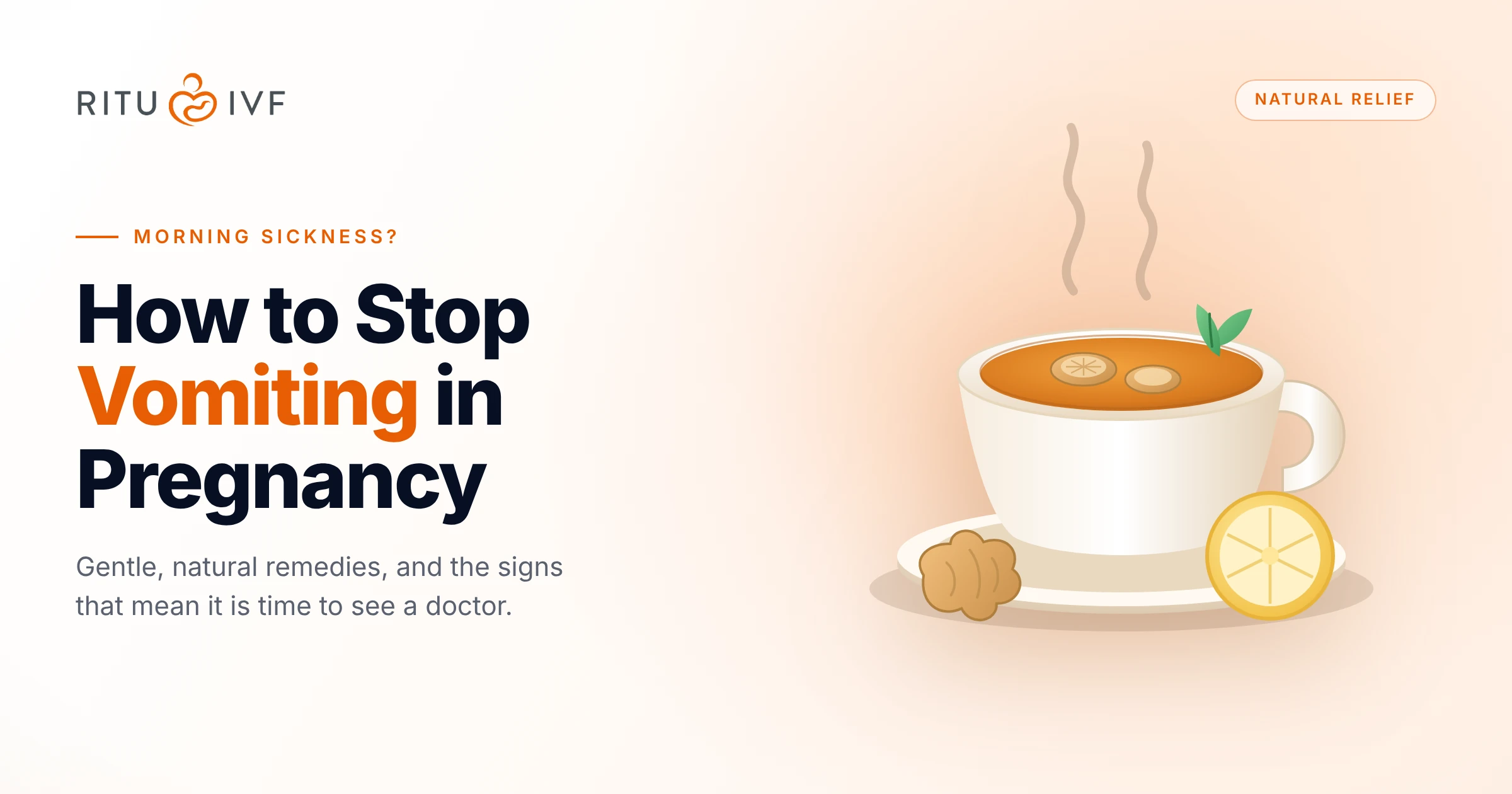
Ginger is one of the most studied natural remedies, and it works for many women. You can try it in a few gentle ways:
- Ginger tea, made by steeping fresh ginger in warm water
- A small piece of ginger candy or lozenge
- Fresh ginger grated into warm water or food
Ginger is widely considered a safe first step, but if you want to use ginger supplements, check with your doctor first.
Keep strong smells away
For many women, specific smells are the biggest trigger. Frying, perfume, smoke, or certain spices can set off nausea instantly.
- Keep your kitchen well ventilated, and open windows
- Eat cooler foods, which give off less smell
- Ask someone else to cook strong-smelling dishes when possible
Rest and manage tiredness
Tiredness and stress make nausea worse, so rest matters more than people expect.
- Get enough sleep and nap when you can
- Rise slowly rather than jumping out of bed
- Go gently on yourself, and lower your daily load where you can
Try acupressure bands
Acupressure wristbands, the kind sold for motion sickness, press on a point on the inner wrist and help some women feel less nauseous. They are drug-free, inexpensive, and worth trying.
Adjust your prenatal vitamins
Sometimes iron-heavy prenatal vitamins can worsen nausea. If you feel queasy after taking them, try having them with food or at bedtime instead. Ask your doctor before changing anything, and never stop them on your own.
What Foods Help Stop Vomiting in Pregnancy?
Choosing the right foods helps you keep up energy and manage nausea. The best options are gentle, easy to digest, and low in strong smells.
| Food | Why it helps |
|---|---|
| Plain crackers, dry toast | Settle the stomach, good before getting up |
| Rice, plain khichdi | Bland and easy to tolerate |
| Banana | Easy carbs and potassium |
| Oatmeal or porridge | A gentle, filling breakfast |
| Boiled potato | Simple, soothing source of carbs |
| Curd or yogurt | Light protein, if dairy suits you |
| Clear soups | Hydrating and nourishing when solids feel hard |
Chew slowly and stop when you feel full. If a food upsets your stomach, do not force it, simply try a gentler option instead.
Best Drinks for Pregnancy Vomiting (Staying Hydrated)
Staying hydrated is very important when you are vomiting, because dehydration makes nausea worse. If a full glass of water feels like too much, sip small amounts often.
- Plain water, sipped steadily through the day rather than all at once
- Oral rehydration solution (ORS), helpful if you are vomiting often; ask a pharmacist for a suitable one
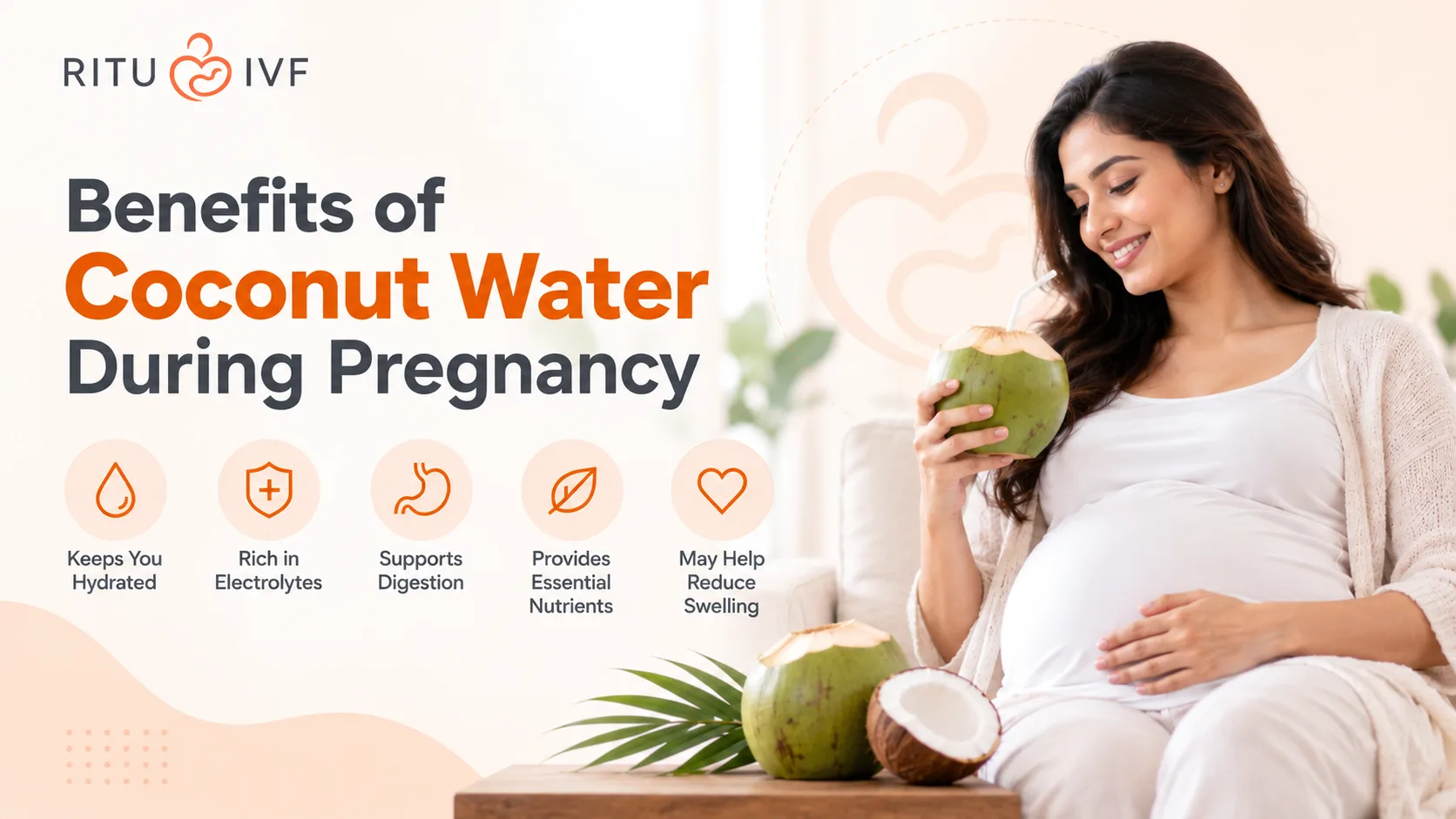
- Coconut water, a natural source of fluids and electrolytes
- Lemon water, the fresh scent helps some women feel less nauseous
- Clear soups and broths, hydrating and easy to tolerate
Coconut water is a popular, gentle choice in pregnancy. You can read more about the benefits of coconut water during pregnancy.
Foods and Habits to Avoid
Some foods and habits can make nausea worse. It helps to limit or avoid these:
- Greasy, fried, and very spicy foods
- Strong-smelling dishes that trigger your nausea
- Very large meals, or long gaps with an empty stomach
- Too much caffeine, so keep tea and coffee low
- Alcohol, which should be avoided completely in pregnancy
Triggers are personal, so notice which foods and smells affect you most. For a fuller list, see our guide to Indian foods to avoid during pregnancy.
Vitamin B6 and Medical Options
When home remedies are not enough, safe medical options exist, and you should not suffer in silence.
Vitamin B6 is recognised as a first-line option for pregnancy nausea and is considered safe. It helps many women. If B6 alone is not enough, doctors may add an anti-sickness medicine, and such combinations are well studied in pregnancy.
The important rule is simple: never start any supplement or medicine, even an over-the-counter one, without your doctor’s guidance during pregnancy. What is right and safe for you depends on your specific situation, so let your doctor decide the type and amount.
New Research: The Real Cause of Severe Morning Sickness (GDF15)
Here is a development worth knowing, and it brings real reassurance. In recent years, scientists have identified a hormone called GDF15 as a major cause of pregnancy nausea and vomiting.
This hormone is produced largely by the placenta, and the amount in the blood appears to influence how sick a woman feels. Newer studies in 2026 expanded this understanding further, pointing toward better ways to predict and, in time, treat severe cases.
Why does this matter to you? Because it confirms something many women are never told clearly: morning sickness is a genuine biological response, not weakness and not something you caused. Researchers are even exploring ways to reduce sensitivity to this hormone in future, which offers hope for women who suffer severely.
When Should You See a Doctor? (Hyperemesis Gravidarum)
Most morning sickness is unpleasant but manageable. Occasionally, though, it becomes severe. This condition is called hyperemesis gravidarum, and it is more than ordinary nausea.
It involves relentless vomiting, an inability to keep food or fluids down, weight loss, and dehydration. It needs medical treatment, often including fluids given through a drip and anti-sickness medication. Contact your doctor promptly if you:
- Cannot keep any food or fluids down for 24 hours
- Are passing little or very dark urine
- Feel faint, dizzy, or very weak
- Are losing weight
- Have vomiting with fever or abdominal pain
- See blood in your vomit
Trust your instincts. It is always better to check than to worry alone. For ongoing concerns, it helps to speak with an experienced gynaecologist in Jaipur who can guide you safely.
Myths vs Facts About Pregnancy Vomiting
Myth: Severe vomiting means you are having a girl. Fact: There is no reliable link between vomiting and your baby’s gender. It is an old wives’ tale.
Myth: Morning sickness only happens in the morning. Fact: It can strike at any time of day or night. The name is simply misleading.
Myth: No vomiting means something is wrong. Fact: Many women have little or no morning sickness and have perfectly healthy pregnancies.
Myth: It is all in your head. Fact: Research on the GDF15 hormone shows it is a real, biological response, not imagined.
Myth: Vomiting will harm or starve the baby. Fact: Ordinary morning sickness does not harm your baby. Only severe, untreated vomiting needs urgent care.
A Note From the Clinic
I always tell my patients that morning sickness, as awful as it feels, is usually a reassuring sign that pregnancy hormones are doing their job. Start with the simple things: eat small amounts often, keep ginger handy, and rest.
At Ritu IVF, we guide women through early pregnancy with honest advice and support, so no one feels they have to simply endure it. Do not wait until you are completely drained to ask for help. Outcomes vary from person to person, and if you cannot keep fluids down, call your doctor the same day.
Summary
Vomiting is a common, usually harmless part of early pregnancy, driven by rising hormones. It typically starts around weeks 5 to 6 and eases by weeks 12 to 16. Small frequent meals, ginger, good hydration, and rest help most women, and vitamin B6 is a safe first-line option with your doctor’s guidance.
The important thing is to know the difference between normal morning sickness and severe vomiting that needs care. When in doubt, reach out to your doctor. You do not have to simply endure it.
Need Guidance Through Your Pregnancy?
If morning sickness is wearing you down, or you are worried about severe nausea and vomiting, you do not have to manage it alone. The right advice can bring real relief and peace of mind.
Book a consultation with Dr. Ritu Agarwal through our contact page, or call +91 9057000555. We are here to support you at every stage.
Frequently Asked Questions
How can I stop vomiting during pregnancy?
Eat small frequent meals, keep crackers by your bed, sip fluids slowly, and try ginger. Avoid strong smells, greasy food, and an empty stomach. If nothing stays down, see your doctor.
When does vomiting stop in pregnancy?
For most women it eases by weeks 12 to 16, as the first trimester ends. It usually starts around weeks 5 to 6 and peaks around weeks 9 to 11.
Which foods stop vomiting in pregnancy?
Bland, easy foods help most: plain crackers, toast, rice, khichdi, banana, oatmeal, boiled potato, and curd. Eat slowly and in small amounts.
Which drink is best for pregnancy vomiting?
Sip plain water often, and try coconut water, lemon water, clear soups, or ORS if you are vomiting frequently. Small sips work better than large amounts.
Does vomiting mean a healthy pregnancy?
Vomiting is common and often reflects rising pregnancy hormones, but having little or no vomiting is also perfectly normal. It is not a measure of a healthy pregnancy on its own.
Does severe vomiting mean I am having a girl?
No. There is no reliable scientific link between the severity of morning sickness and your baby’s gender.
Can vomiting harm my baby?
Ordinary morning sickness does not harm your baby. Only severe, prolonged vomiting with dehydration, known as hyperemesis gravidarum, needs urgent medical care.
When should I see a doctor for vomiting in pregnancy?
See a doctor if you cannot keep fluids down, are passing little or dark urine, feel faint, are losing weight, or have vomiting with fever, pain, or blood.
Medical Disclaimer: This article is for general information and awareness only. It is not a substitute for personal medical advice. Do not start any supplement or medication during pregnancy without consulting your doctor. Every pregnancy is different, so please seek personalised guidance from a qualified gynaecologist. This article was prepared with the help of research and digital/AI tools and reviewed for accuracy by Dr. Ritu Agarwal.